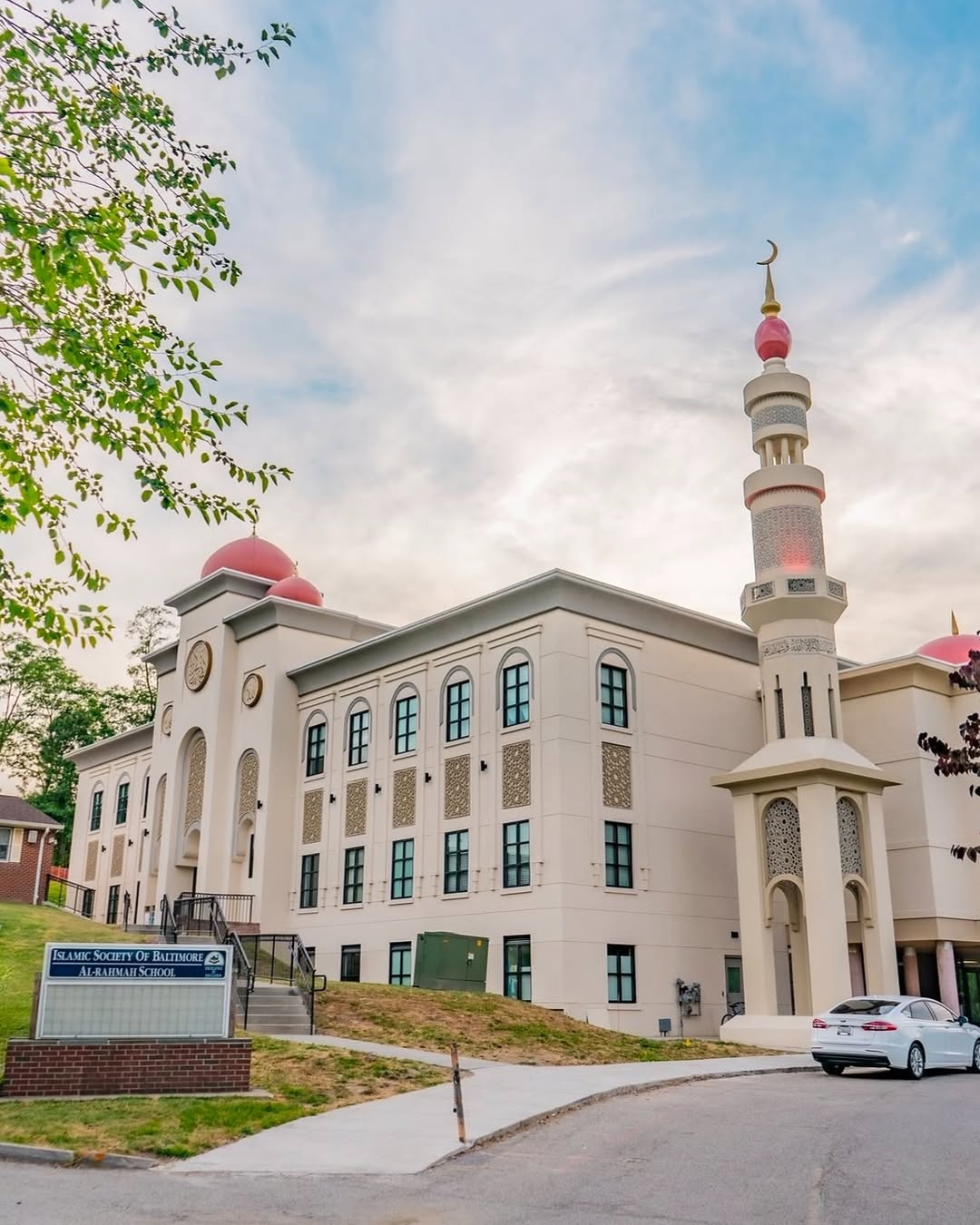
A delve into the founders and origins of the region’s first Islamic institution — and the communities they developed alongside.
By Hasan Maharoof · 31 min read
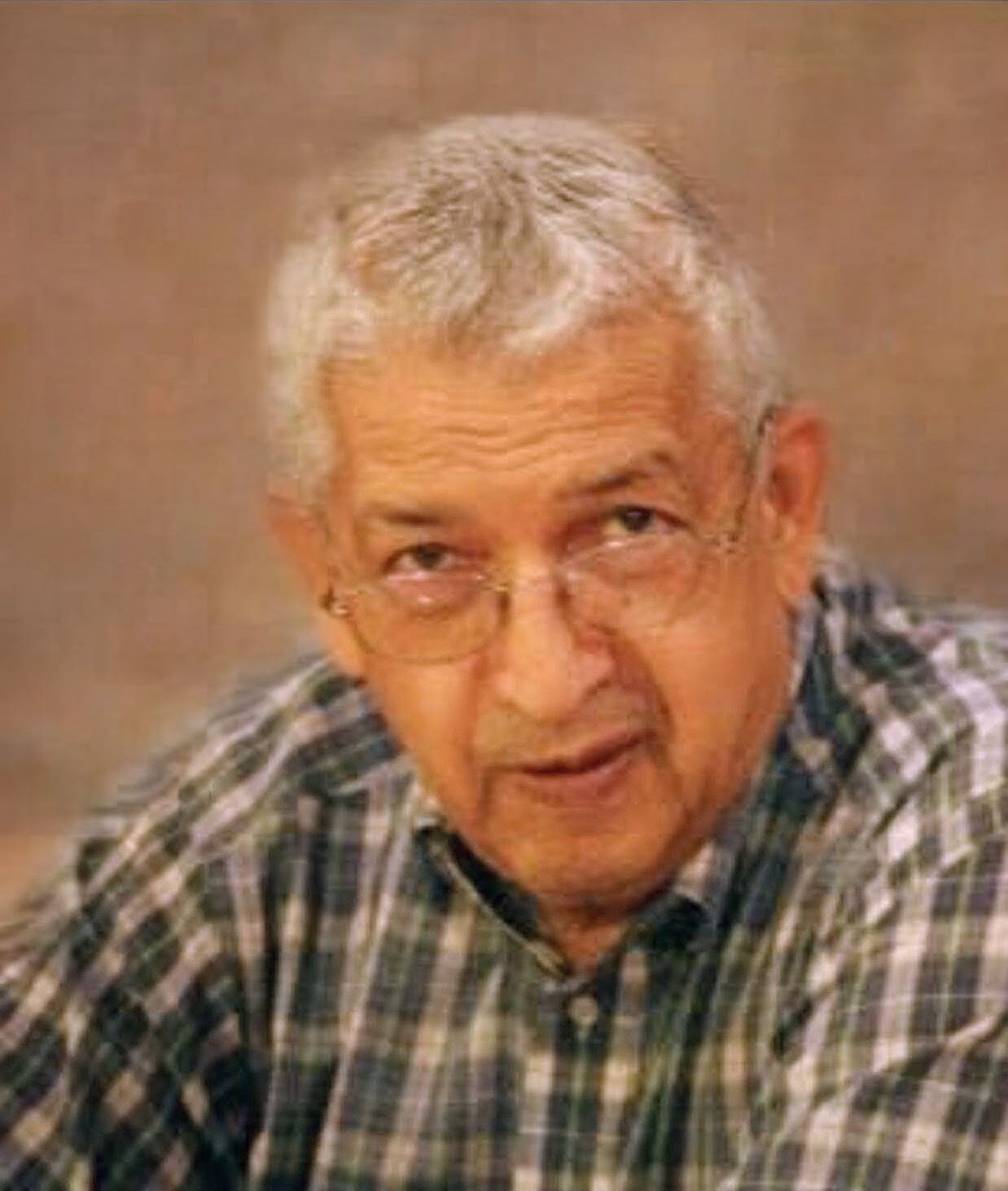
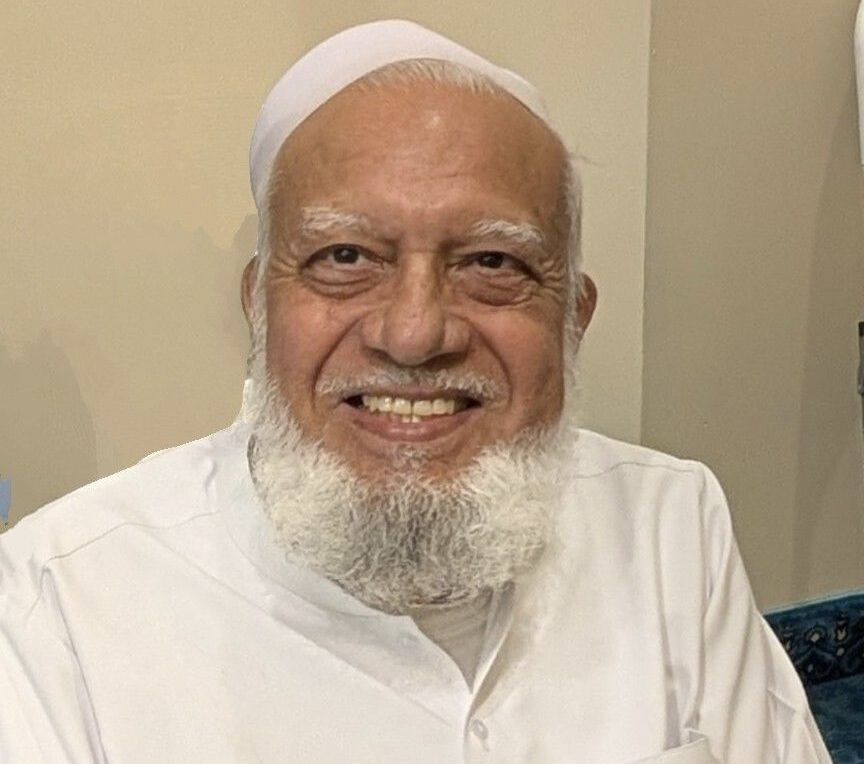
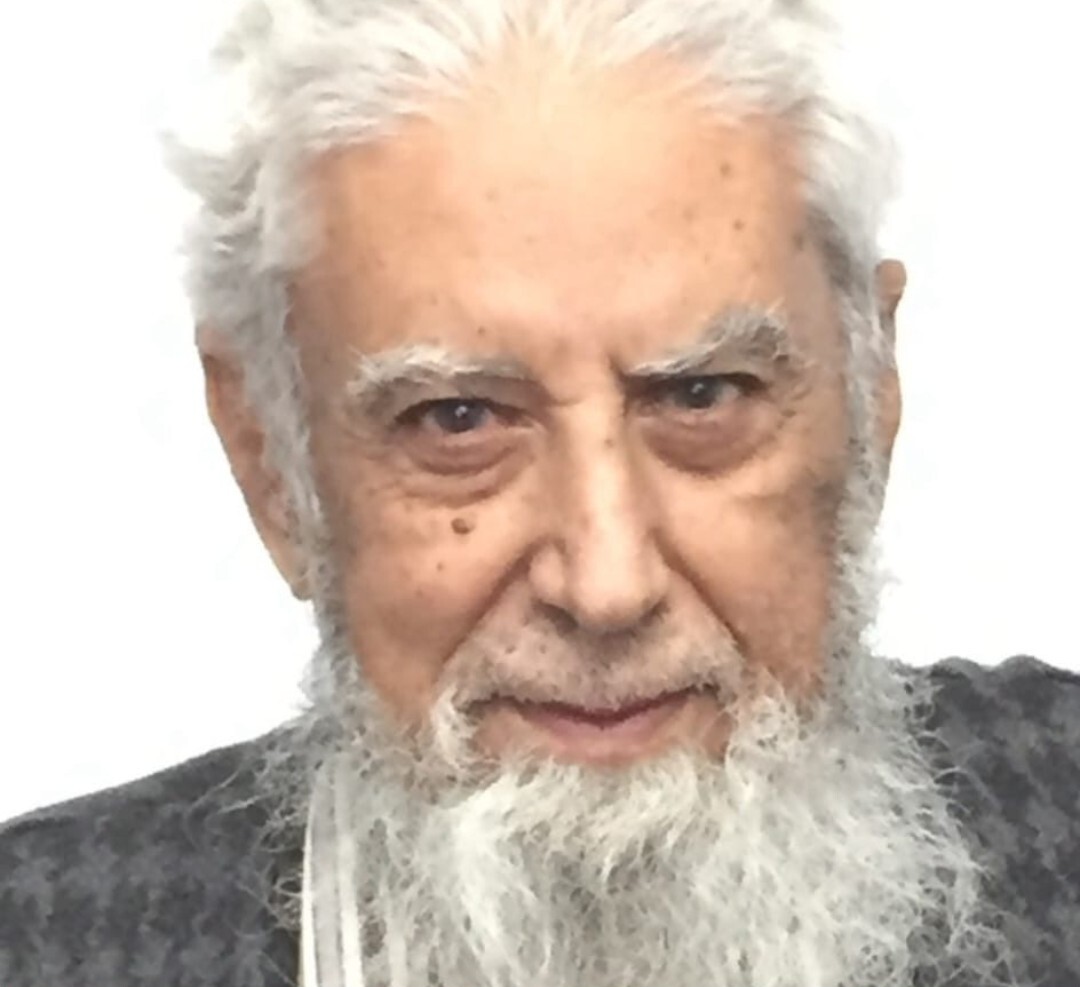
The founders of the Islamic Society of Baltimore come from a wave of immigration that occurred after 1965. A small group of these doctors, engineers, and graduate students gathered at apartments on Baltimore’s northeast side. About nine or ten of them helped create ISB in 1969.
Here in Baltimore, they grew alongside the city’s African American convert communities, who would establish early mosques like Masjid as-Saffat and Masjid ul-Haqq, in the ’70s. ISB would operate regular Sunday gatherings in a hall at Johns Hopkins until the early ’80s, when they moved to their present location in the County.
The institution has since grown vastly, becoming a pillar of the Baltimore-area Muslim community. However, as decades pass and ISB’s leadership moves into new hands, the stories of its founding largely lie undocumented, after over 50 years.
Drawing on original interviews with three of ISB’s 1969 founders—Dr. Mohamed Shami, Dr. Ibrahim Syed, and Azim Khan—along with conversations with members of Baltimore’s African American Muslim communities, this article reconstructs the context and stories surrounding ISB’s founding.
Context
Post-1965
The foundation of the modern American Muslim community dates to demographic shifts that occurred in the wake of the Immigration and Nationality Act of 1965.
Immigration from most of Asia — including South Asia and the Middle East — were banned by WW1-era immigration restriction legislation. It was not until 1952 that immigration from Asia was reopened at a heavily restricted level.a
The 1965 Immigration Act, at the height of the civil rights movements, abolished these quotas entirely, opening the door to large-scale Asian and Arab immigration—and with it, the formation of Muslim communities. For this sole reason, the earliest extant Islamic institutions in many cities date to the ‘60s or ‘70s.
This wave brought students and professionals, many pursuing degrees from American universities—and many of whom brought their families with them. They typically arrived as students (F-1 visa), transitioning into permanent residency through employment, and later obtaining green cards.
Prior communities
In a few cities, pre-existing African American Muslim communities go back decades earlier, originating with influences from early Ahmadi missionaries, with Sunni influences as well. In Baltimore, where Nation of Islam influence was heavy, it would not be until the early ‘70s for a Black Muslim community to formalize.
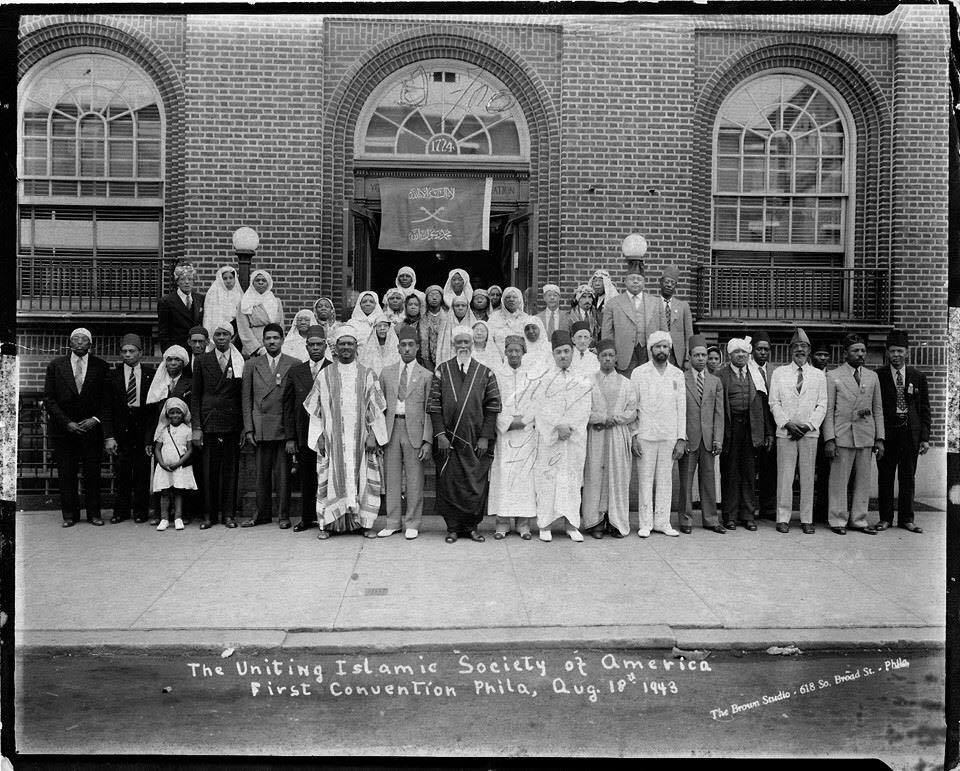
The Uniting Islamic Society of America’s first convention in Philadelphia, 1943 — a humble precursor to conventions like that of ISNA which would take off in the ‘60s. The group photographed is almost entirely African American.
An earlier wave of Muslim immigration, centered on the Midwest, occurred among a surge of Arab immigration beginning in the late-19th century. The slew of mosques they built in the ’20s and ’30s were the first true mosques in the U.S.—these communities would quickly dissolve.b
The earliest Muslim presence in the U.S.—though involuntary—is among slaves. While only a handful of anecdotal cases of Muslim slaves in the U.S. have been recorded, among the oldest of these is from Maryland.
“Upon our Talking and making Signs to him, he wrote a Line or two before us, and when he read it, pronounced the Words Allah and Mahommed; by which, and his refusing a Glass of Wine we offered him, we perceived he was a Mahometan [Muslim], but could not imagine of what Country he was, or how he got thither; for by his affable Carriage, and the easy Composure of his Countenance, we could perceive he was no common Slave.”
— Description of Ayuba Suleiman Diallo, enslaved in Kent County, Maryland, 17311
In another instance, an enslaved Muslim, Abdul Rahman Ibrahima Sori, visited Baltimore in 1828, following his emancipation. Individual Muslims have, in this regard, passed through Baltimore for centuries.
Founding
Sarril Road community
By the mid-to-late 1960s, many young Muslims, along with their spouses and young children, were scattered across American cities. They moved frequently following the tides of their education and careers. Muslims in Baltimore had nowhere to pray Jumu‘ah salat, and those hoping to pray Eid drove to Washington, D.C. to do so.c
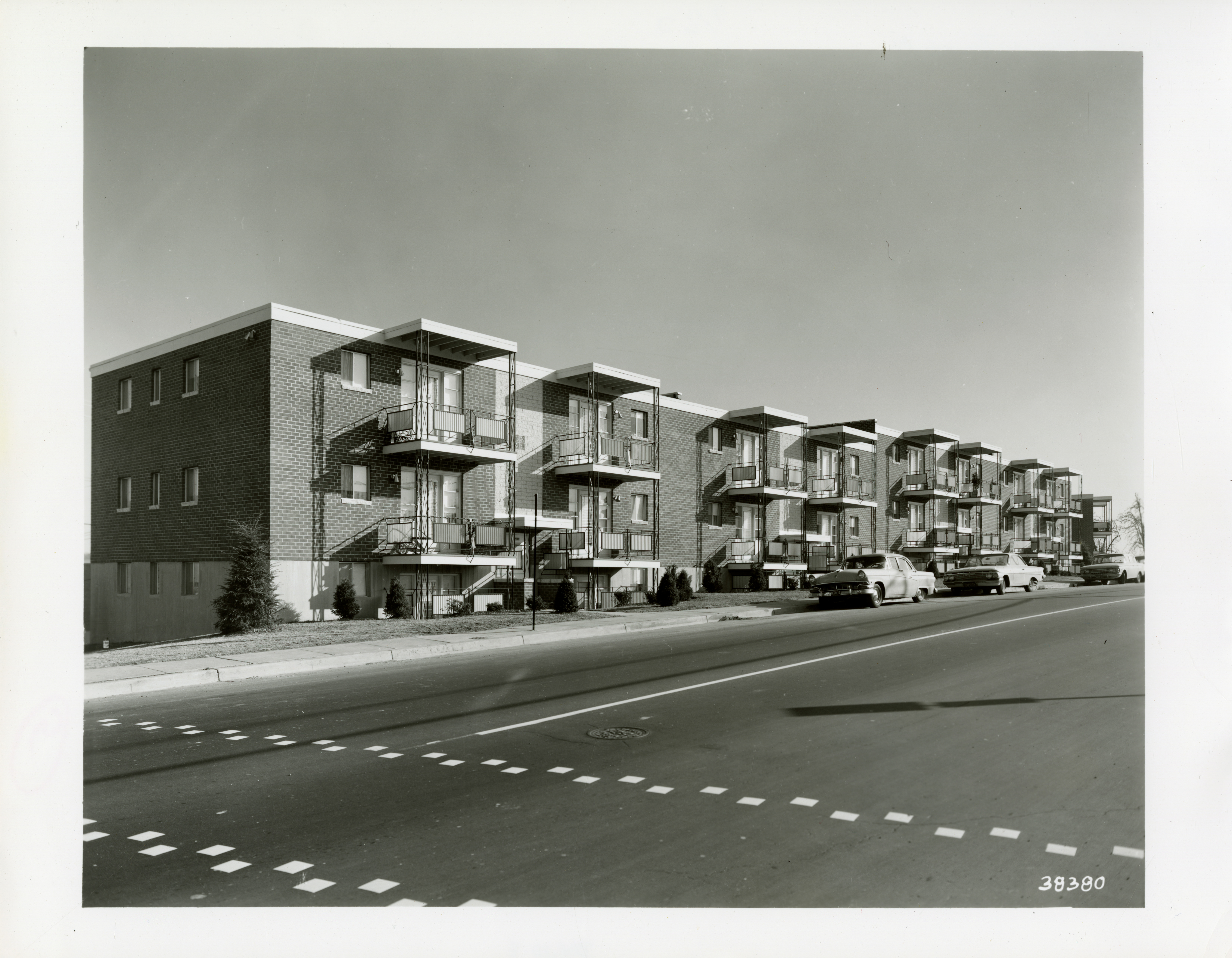
By the late ‘60s, a handful of about four or five mostly Pakistani and Indian Muslim families became close neighbors within the Sarril Road Apartments on Baltimore’s northeast side. It was among this particular group that the seeds for the region’s first Islamic institution would be planted.d
The Sarril Road Apartments as they appeared in the 1960s, as viewed from Frankford Avenue.3
“There were very instrumental, about four, five people on the same road.”
— Dr. Mohamed Shami
Of the founding group, many first arrived to the US via Baltimore, while for others, it was their second or third residences in the country. Likely the earliest was Azim Khan, who remembers settling in Baltimore in ‘66 after first arriving to D.C. in ‘63.
“I came in ’63 as a student … I was in Washington [D.C.]. Then I came to Baltimore after I graduated and I was working [for the] Maryland State Highway Administration as [an] engineer.”
— Azim Khan
Most arrived in the Apartments or surrounding area by 1968—including Dr. Mohamed Shami.
“I came in 1964, in [the] state of Washington. Pullman, Washington. And I was there until ’66. Then I came to Michigan State. I finished my doctorate in ’68, and then I got a job [in Baltimore].”
— Dr. Mohamed Shami
The last of ISB’s founding group to arrive was Dr. Syed, who, after first immigrating to Canada in ’67, moved to the Apartments in the summer of ’69 to study at Johns Hopkins.
Dr. SyedI came to Baltimore in August 1969. … we came from Halifax. We went by train to Montreal. From Montreal, we came by train to New York. From New York, we took a bus and we came to a bus stand in Baltimore. Then, my research guide, Dr. Fazle Hosain, he picked me up and he lived close to Sarril Road Apartments. So he was a faculty.
HasanOkay, so when you came in August, were all the other … Firozvi, Javaid Shafi, and Shami—
Dr. SyedWere already there. Yes, exactly.
Not all immigrants intended to or were able to settle in the U.S. permanently. J-1 (exchange visitor) visa holders were required to return home—Dr. Shami, due to his daughter, was able to receive a waiver.
HasanSo many of them returned back to their countries?
Dr. ShamiYes, yes. I was going to go too, but because I had a baby girl, she has birth defects. So because of her, I had to stay. And I got an offer in North Dakota. And then I got the offer here in Baltimore, and Baltimore had that Johns Hopkins. So my advisor said, go over there. So because of my girl, I picked up Baltimore.
It was those who secured permanent residency who would be inclined to build lasting Islamic institutions.
The origins of ISB
Muslim residents at the Apartments included Dr. Syed and Dr. Shami, in addition to Dr. Tarique Firozvi, Dr. Javaid Shafi, Nawaz Khattak, and Mohammed Ghazi. Others, like Azim Khan, lived in the surrounding area.
“Firozvi and me used to [live in] a U-shape on the same complex within that road. And I could see him from my apartment. And he could see me. So when we were talking, we hold the phone looking at one another. Very very nice guy, very nice guy.”
— Dr. Mohamed Shami
Dr. Syed, who moved to the Apartments in the summer of 1969, did not recall much activity himself — only that he took part in an initial meeting later held to form ISB.
“Just neighbors. We’re saying, you know, ‘Hello.’”
— Dr. Ibrahim Syed
Dr. Shami and Azim Khan arrived earlier, and remember gatherings held among the Muslim neighbors on Sarril Road, including Muslims from the surrounding areas.
“Many of them [are] living on the same street. But some live a little bit far, but we get together for functions, and they get together here and there.”
— Dr. Mohamed Shami
Azim Khan, specifically, recalled more regular, formal halaqas, where they would recite and explain verses of the Qur’an.
“We used to meet at the other people house on Sunday for an hour and we do recitation and explanation of Quran ayat.”
— Azim Khan
Living in the adjacent Amberwood Apartments, Azim would walk to reach the meetings on Sarril Road. He remembers a maximum of ten to fifteen families present.
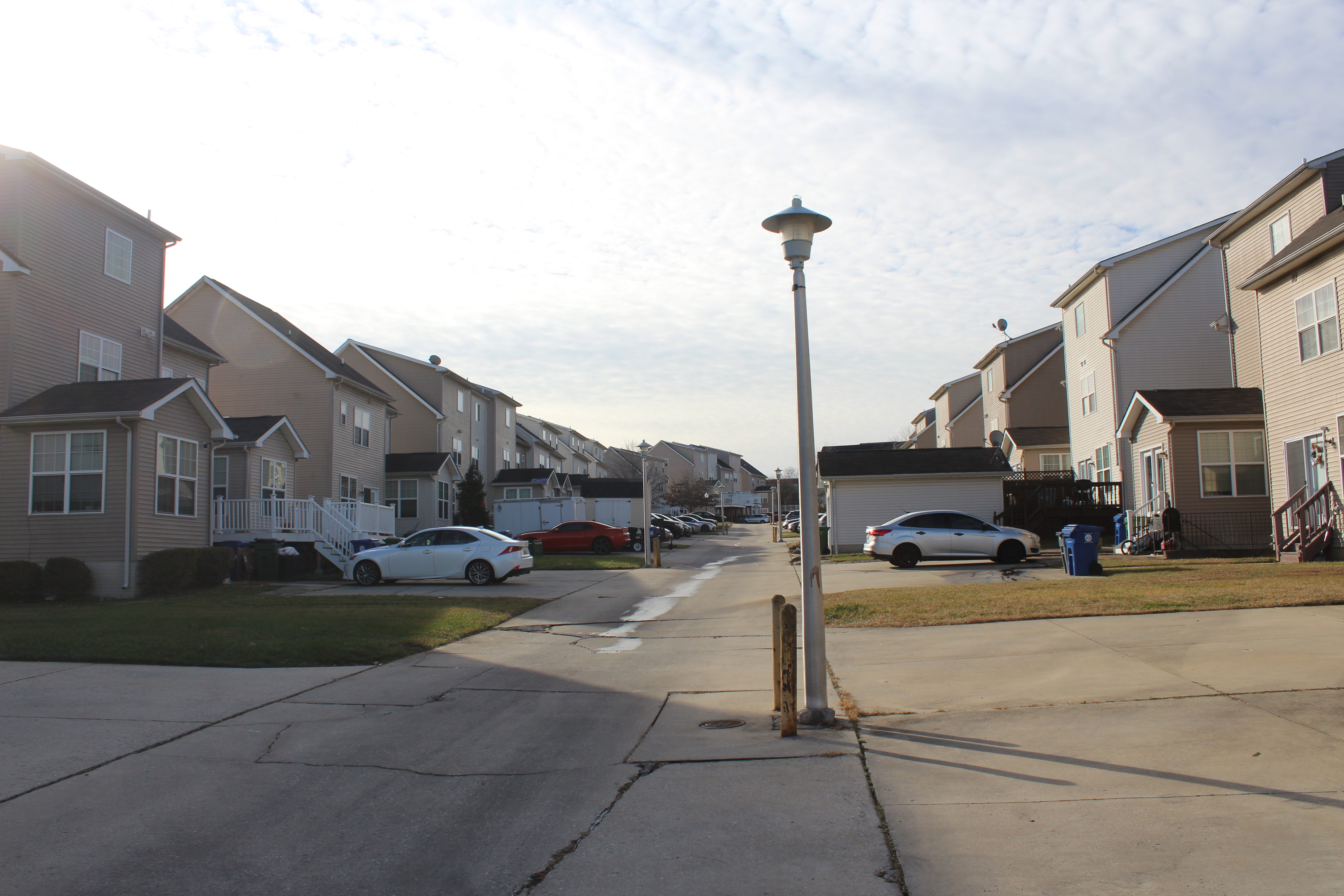
Sarril Road, shown here, survives as a back-access road—the Apartments were demolished in the early 2000s.
As these early Muslim immigrants met, some hoped to formalize their connections. Dr. Shami explains how the idea to organize would be an evolutionary process.
“So that was the evolutionary process. … When people get together, they plan that ‘We should have our own place’, ‘We need to raise money’ … Javaid Shafi was very functional, also.”
…
“We were only 4, 5 people, there was another guy, his name was Dr. Khattak. And Azim Khan. These two people, Azim Khan was very active. Very active.”
— Dr. Mohamed Shami
Their intentions were, as described by Dr. Mohamed Awad—a founding member and first president—to “maintain their religion for themselves and to pass on their Islamic heritage to their children in the face of strong pressures toward assimilation.”
Dr. Ahmad H. Sakr, from Chicago
While Dr. Shami relates an evolutionary process, an origin story provided by Dr. Syed differs.
According to him, there was a formative meeting at the Apartments involving four of the Muslim residents there—himself, Dr. Mohamed Shami, Dr. Tarique Firozvi, and Dr. Javaid Shafi—and a fifth, Dr. Ahmad Sakr.
It was at this meeting, at the apartment of Dr. Firozvi, he relates, that Dr. Sakr initiated the idea for the Islamic Society of Baltimore.
Dr. SyedActually, it was initiated by Dr. Ahmad Sakr. Do you know him?
HasanI have not heard of his name. I don’t think he’s in the community anymore.
Dr. SyedNo, no. He came from Chicago. He was a biochemist from Lebanon. And he gathered 4 of us. So 5 people are the founders of the Islamic Society of Baltimore.
…
Dr. SyedHe was the one who initiated … then he said let’s form Islamic Society of Baltimore.
The others do, in fact, recall that Dr. Sakr had visited the formative group at the Apartments. However, the notion of such a pivotal role was not corroborated.
“He did come to my home once long ago but I don’t remember we talked about this project.”
— Dr. Shami
Dr. Sakr established the Muslim Students Association (a precursor to ISNA) in Chicago in 1963. He was a pioneer of Islamic work in the U.S., and remains a household name among older members of the American Muslim community.
He was almost certainly staying in Baltimore to help with establishing chapters of his MSA, particularly the one at Johns Hopkins University. In the process, he had somehow gotten in touch with the Muslims on Sarril Road.e
While it is certain that Dr. Sakr’s prior experience in establishing Islamic organizations would have been useful to the members on Sarril Road, the extent of his role remains a mystery.
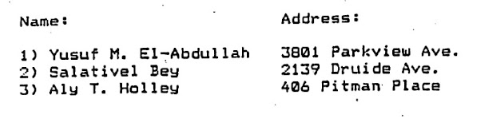
The Islamic Society of Baltimore was legally registered on September 2, 1969. The paperwork was filed by three Black Muslims — Yusuf El-Abdullah, Salativel Bey, and Ali Holy — who held important early roles in the organization, and whose full stories appear later in this account.
The following submitted statement was given in the Articles of Incorporation:
“… are to conduct a program of Islamic education for adults and children, to organize religious, social and cultural activities for the benefit of the Muslim community and to help the American people to understand the Islamic principles and the Islamic way of life.”
— ISB Articles of Incorporation, 19695
Founding members
“It was an evolutionary process, and many people contributed to it. You can give credit to all of them. Not one person.”
— Dr. Mohamed Shami
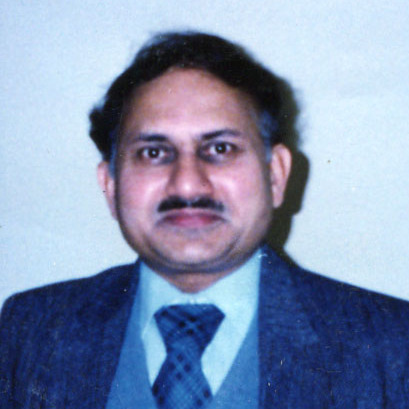
Dr. Mohamed Awad
Anatomy Professor · First President
Dr. Mohamed Awad (1925–2006), an Egyptian, immigrated to Baltimore in 1968 as an exchange professor, joining the University of Maryland School of Medicine.
As the only Arabic speaker who could lead Islamic discussions, he was chosen to be ISB's first president.
He relocated to Chicago in 1970, returned to Baltimore in 1979, and served again as ISB president in the early '80s. By 1983, he was a chemistry teacher at the Baltimore Polytechnic Institute.
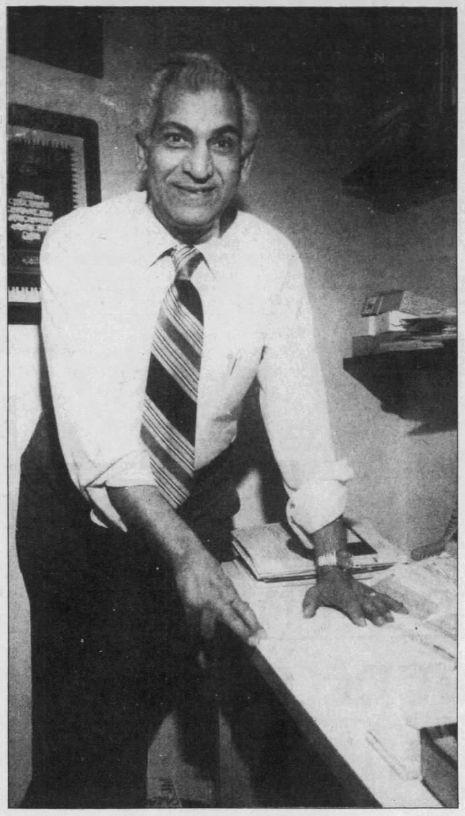
Dr. Tarique Firozvi
Physician
Dr. Tarique Firozvi (b. 1944) immigrated from Pakistan to Baltimore in 1968, after graduating from Lahore Medical & Dental College in 1967. At the time of ISB's founding, he was doing residency at Church Hospital as an internal physician, and later, at the University of Maryland.
Founding meetings were held in his apartment. He maintained a medical office in Essex until retiring in 2012.
Azim ur-Rahman Khan
Civil Engineer
Azim ur-Rahman Khan (b. 1935), immigrated from Pakistan to Washington, D.C. about 1962, attending Catholic University and Howard University before moving to Baltimore about 1965. A civil engineer, he worked for the Maryland State Highway Administration and lived in the adjacent Amberwood Apartments, crossing the lawn of a local elementary school to reach the Sarril Road Apartment meetings.
Dr. Ahmad H. Sakr
Biochemist · MSA Founder
Dr. Ahmad Sakr (1933–2015), a Lebanese biochemist, was educated at the American University of Beirut and earned his PhD at the University of Illinois. He was the founding president of the Muslim Students Association in Chicago in 1963.
A traveling scholar, Dr. Sakr visited Baltimore while assisting with MSA outreach, particularly at Johns Hopkins University, and met with local Muslims during the formative period of the Islamic Society of Baltimore; his presence contributed to its early development, though the extent of his involvement remains unclear.
Dr. Javaid Shafi
Physician
Dr. Javaid Shafi (b. 1942), a Pakistani physician, was completing his residency at the University of Maryland Medical Center at the time of the Islamic Society of Baltimore's founding in 1969. He later practiced internal medicine in Baltimore, worked at Provident Hospital and the University of Maryland Medical System in the 1970s–80s, and by 1978 was affiliated with Garwyn Medical Center. Shafi served as ISB's second president during the late 1970s.
Dr. Mohamed Shami
Government Worker
Dr. Mohamed Shami (b. c. 1934) immigrated to the US from Pakistan in 1964, studying first at Washington State University until 1966, then at the University of Michigan, earning a PhD in Education. He moved to Baltimore in 1968, working for the Maryland Department of Education.
He left for a job in Saudi Arabia in 1976, then continued to Raleigh, North Carolina, and Columbia, South Carolina, where he helped establish Masjid Noor Ul Huda in 2003, and where he currently resides. His legacy at ISB was carried on by his brother Iftekhar, who served its Sunday School, passing away in 2022.
Dr. Ibrahim Syed
Radiologist
Dr. Ibrahim Syed (b. 1939), immigrated from Bangalore, India to Halifax, Canada, in 1967. He settled in Baltimore in 1969 with his wife and two daughters, pursuing a Master's in Nuclear Physics at Johns Hopkins University.
He served as ISB's first secretary until his departure in 1973 to Massachusetts. He currently resides in Louisville, Kentucky. He has kept in touch only with Dr. Shami, returning to visit ISB in '95.
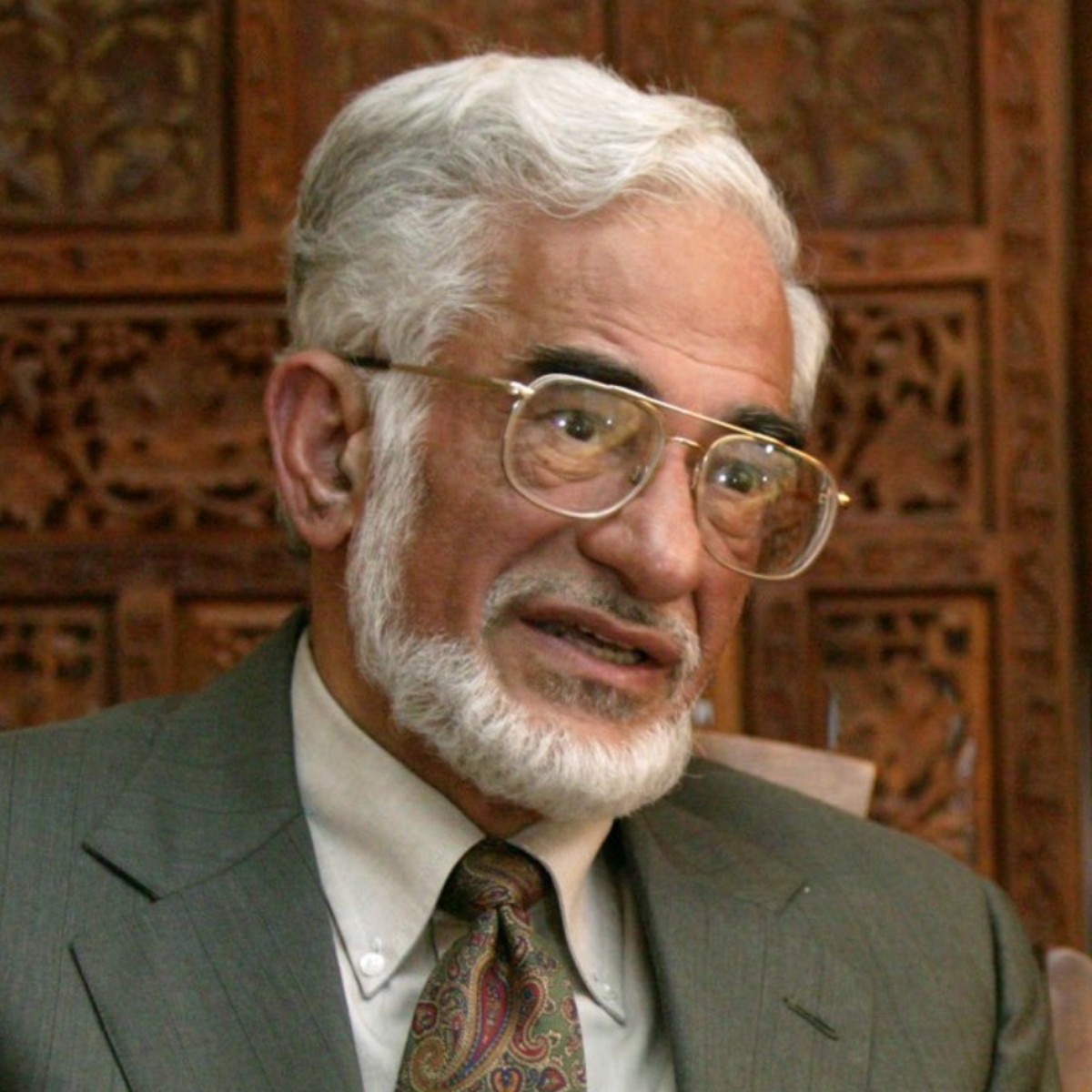
Dr. Mahmud Thamer
Cardiovascular Surgeon
Dr. Mahmud Thamer (1930 – aft. 2003) was an Iraqi cardiovascular surgeon.
The above are those associated with various founding discussions at the Sarril Road Apartments in 1969, according to first-hand accounts from Dr. Syed, Dr. Shami, and Azim and Aisha Khan.f
Yusuf M. El-Abdullah
Incorporator
Salativel Bey
Incorporator
Alli Tabou Holley
Incorporator · Resident Agent
These three African American men legally registered the Islamic Society of Baltimore in 1969 and helped fulfill various early legal roles, including as ISB’s first incorporators and resident agent. Their identities and life stories remain obscure.
Meetings at JHU
Following the legal registration of ISB, Dr. Awad, a professor at the University of Maryland School of Medicine, secured permission from his friend, who was a Muslim professor at Johns Hopkins University, for ISB to hold on-campus meetings there.g
"We got the idea, we got through Dr. Awad his friend was a professor at Johns Hopkins. … We start going to Shaffer Hall. Got permission through him."
— Azim Khan
A meeting was described by Aisha Khan, apparently held prior to the first Sunday meeting at Hopkins. She describes arriving in Baltimore on the last day of October 1969 to join her husband Azim, and that there was a meeting the following day at the apartment of Dr. Shami.
Aisha KhanI came here in October. October, last day of October, and they make that Association first they have the meeting on the November 1, 1969.
HasanAh, okay.
Aisha KhanYes.
HasanAnd then the first meeting at Shaffer Hall was November 2?
Azim KhanYeah.
This meeting’s purpose was to plan the weekly Hopkins gatherings. She associates the following names with this meeting: Dr. Shami, Dr. Syed, Dr. Firozvi, Dr. Shafi, Dr. Sakr, Br. Khan, Dr. Awad, and Dr. Thamer.
Aisha KhanBut you had the meeting [at] the Shami bhai.
Azim KhanYeah. I had meeting that time at Shami’s house.
HasanIs this the same meeting, November 1?
Aisha KhanYes, that is the same meeting. We lived nearby … walking distance.
She relates that ISB held its first official Sunday meeting at Hopkins the next day, on November 2, 1969. Relying on oral memory, exact details regarding names and dates should be taken with a grain of salt.h
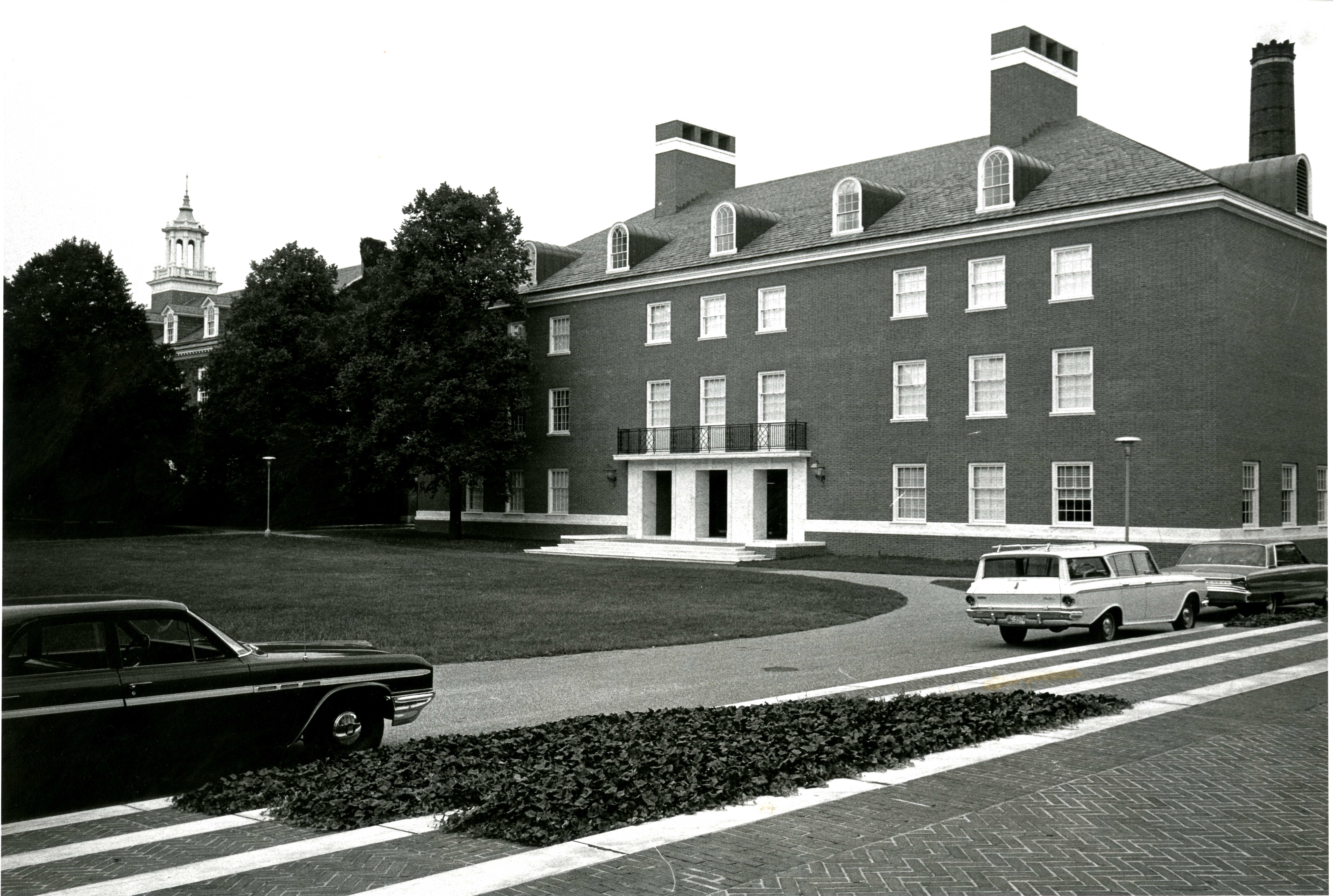
Shaffer Hall, the location of ISB’s weekly meetings, pictured in 1965.9
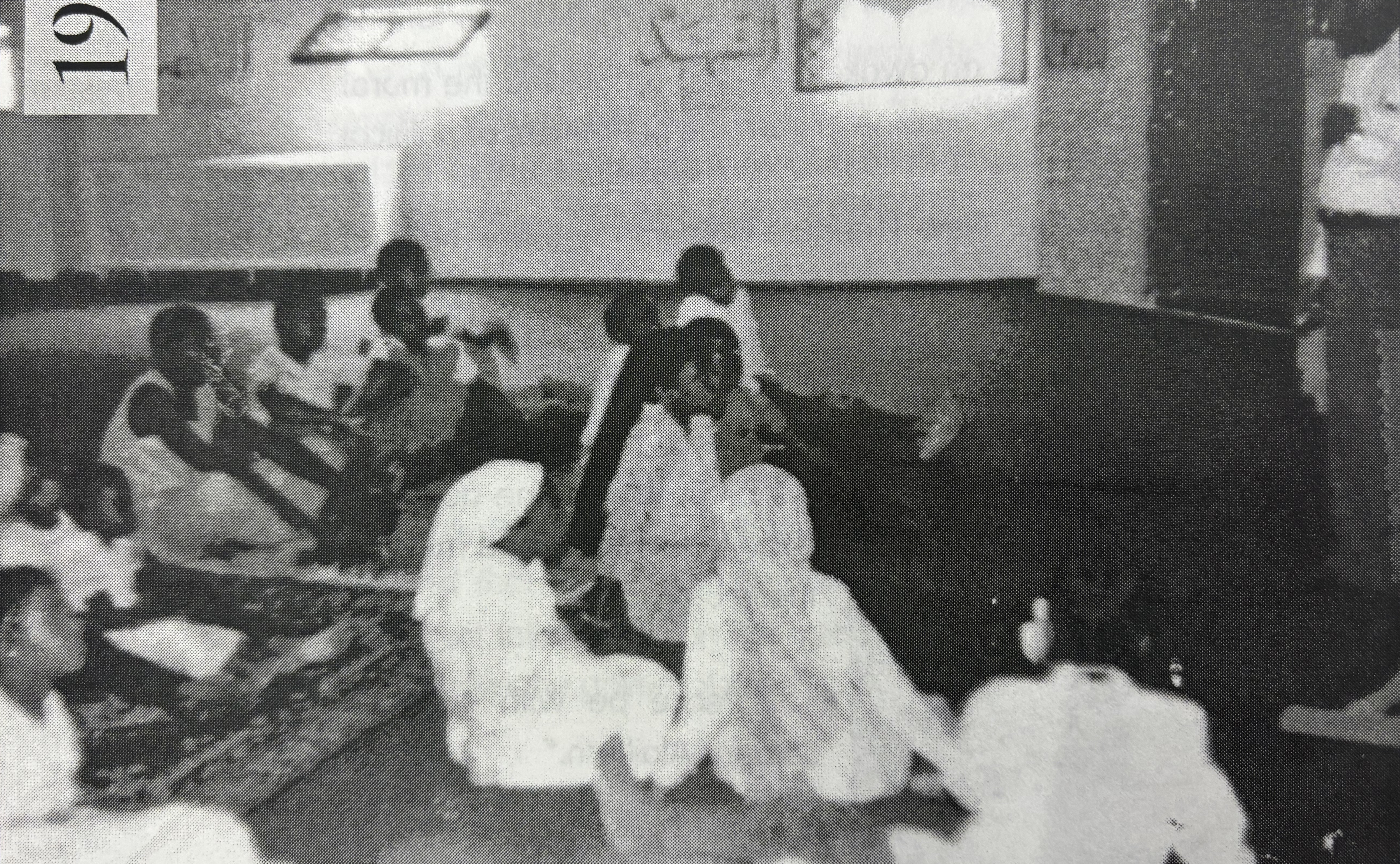
The Hopkins meetings were much like the ones at the Apartments—they were a couple of hours long each, and consisted of Qur'an recitation and commentary, along with Dhuhr and Asr prayers. They numbered from ten to no more than fifteen families.
"We had families, we had children, we had ladies, we had men. And ladies sat on one side. You know, the children could not play, they were just listening. They had no playground. And we men were there. And then usually one of the men we read the Qur'an, translated, and made the commentary. After that, we prayed. And then we had the snacks. That was good for the children too, you know. The children came because of the snacks. It's boring otherwise."
— Dr. Ibrahim Syed
It is here where ISB would establish itself over the following decade. They began to grow both by word-of-mouth and through deliberate campaigning. Many South Asian international students at the university would join.
Dr. SyedLarge number of members joining us. Students, workers, faculty.
HasanSo even the faculty—faculty of [JHU], or faculty of [other] universities?
Dr. SyedNo, faculty of Johns Hopkins University and University of Maryland.
HasanWow, so [the faculty] were Muslim?
Dr. SyedYes, also students came to study at Johns Hopkins, you know from Bangladesh.
HasanRight.
Dr. SyedAnd there was a diploma degree called Master of Public Health, and there were 100 students, and all the 100 students were from foreign countries.
HasanWow, so for this diploma—?
Dr. SyedNo American came there. All foreign students came from Bangladesh, Pakistan, like that.
HasanWow, wow. So what was the name of this again?
Dr. SyedMaster of Public Health. MPH.
HasanSo, it was awarded, it was given to—?
Dr. SyedIn 9 months you get this. And everybody get scholarship. That was a great advantage for us. Because most of them were—majority of them were Muslims. Pakistan, Bangladesh, India.
HasanThey all joined ISB?
Dr. SyedExactly. That was a boost for us.
They may have also overlapped in membership with the university's MSA, though Dr. Syed was unable to confirm—a graduate student, he was not a member of the undergraduate group.
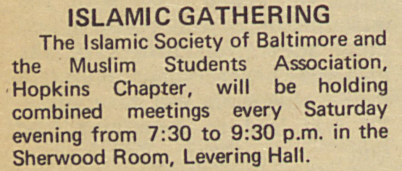
While ISB met on Sundays, the MSA met on Saturday evenings at Levering Hall—the two sometimes held joint meetings.4
Early years
Dr. Awad was elected ISB's first president, in 1969, through an informal selection. His knowledge of Arabic and ability to lead tafsir discussion set him apart. Additionally, he was the oldest, being in his 40s—the others were in their late 20s and 30s.
"Then we had a brother, Awad, from Egypt. He was a professor of anatomy, I think, in the University of Maryland at that time. He became our Emir, our president, first president of the Islamic Society of Baltimore. He was a very good brother. He was from Egypt. His name is Awad. I don't know his first name. Very good brother."
— Dr. Syed
Dr. Syed himself became ISB's first secretary, wherein he served until 1973. I asked him what that was like:
HasanWhat did you do as a secretary of the ISB?
Dr. SyedI had to write the minutes of the meeting, you know. We hold meeting. Had to write the minutes of the meeting. Meaning what happened, who were present, what happened, like that.
HasanWow, so you were that particular about the meetings?
Dr. SyedYeah. I had to write the descriptions—who were present, who were absent, what was discussed, like that.
HasanWhy was this meticulousness so important?
Dr. SyedI loved to do it, you know. I was a typist. I could type. I had a typewriter.
HasanOh, so you did this on a typewriter?
Dr. SyedRight, portable typewriter it was called.
HasanWhat topics were specifically discussed?
Dr. SyedWe were discussing about when to conduct the Eid, you know, who will be coming, and when to have the picnic, you know, things like that. And also, raise awareness in the community, in the city. And, to tell—you know, I used to tell other students in Johns Hopkins—I was in the School of Hygiene. Right, now it's called Bloomberg School of Hygiene. Bloomberg. You heard that? Right in front of the hospital—Johns Hopkins hospital.
HasanSo, did you lead any outreach work in this time? So you said in the city, you did outreach work. Is that correct?
Dr. SyedNo, I used to just camp in, in the university, in the School of Hygiene. And I used to meet, when I saw the people, you know I can recognize—these people are not white Americans. Their color is brown, you know.
HasanOkay, so you would find members and—
Dr. SyedYeah. And I would tell them, I would invite them to come to our meetings on Sundays.
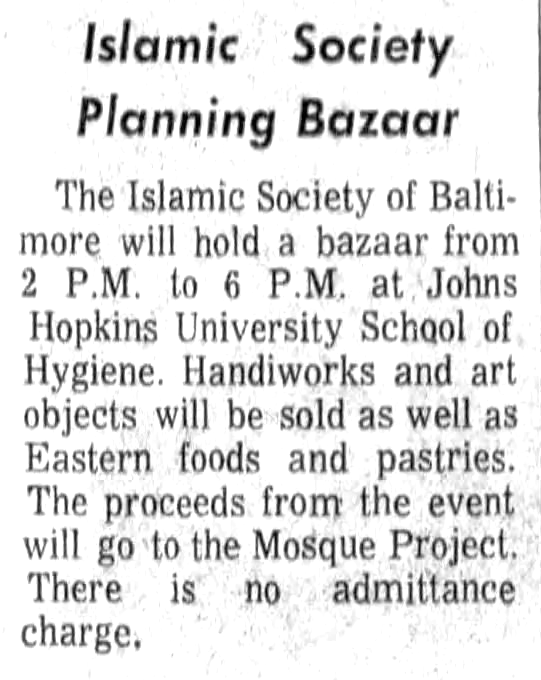
The group envisioned a mosque from the very beginning, and it is this which they firmly set toward in the following years. Several 'Meena bazaars' were held on campus in the following years, where they sold ethnic foods and crafts to raise funds.
A Baltimore Sun promotion for ISB's Meena bazaar cites the "Mosque Project", June 1970.10
Fundraising was a grassroots effort. There were no international donors. Members contributed what they could. Dr. Shami remembers holding picnics at a local park, where they would raise funds. Dr. Syed sold his personal stamp collection.
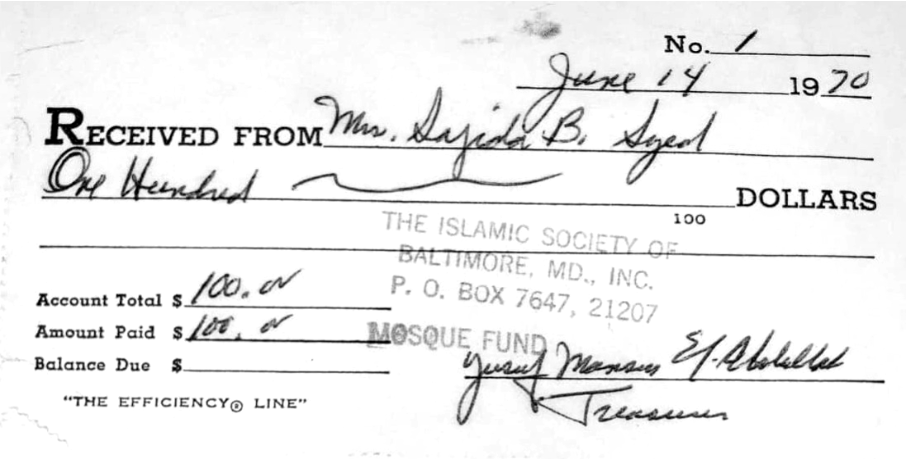
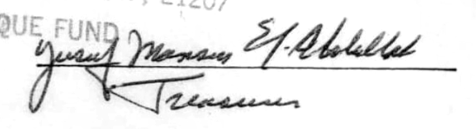
The words “MOSQUE FUND” printed on this 1970 donation receipt are an early reference to the mosque project.
African American Muslim community
By the early ‘70s, a small Black convert community began to grow with vigour in Baltimore. Unbeknownst to these ISB members, they would form Baltimore’s first mosque, Masjid as-Saffat, in 1971.
The story of Baltimore’s Black Muslim community follows almost parallel to the immigrants’, beginning at about the same time in the late ‘60s. Their origin and influences, however, lie in movements that pre-date the latter’s arrival by several decades.
Early movements
After early-20th century migrations from the South led to the formation of Black communities in inner cities for the first time, many sought to reconcile a deep past of oppression and racial segregation with movements of self-identity.
Two Islamic-oriented movements would have a presence in Baltimore’s Black communities—the Nation of Islam, and the Moorish Science Temple of America. Fusing black nationalist separatist ideology with Islam, the Nation in particular would quickly take off with leaders like Elijah Muhammad and Malcolm X.
Their Temple No. 6 was established in Baltimore, in 1947, by Isaiah Karriem, and would quickly grow through the ‘40s and ‘50s, attracting thousands of followers.
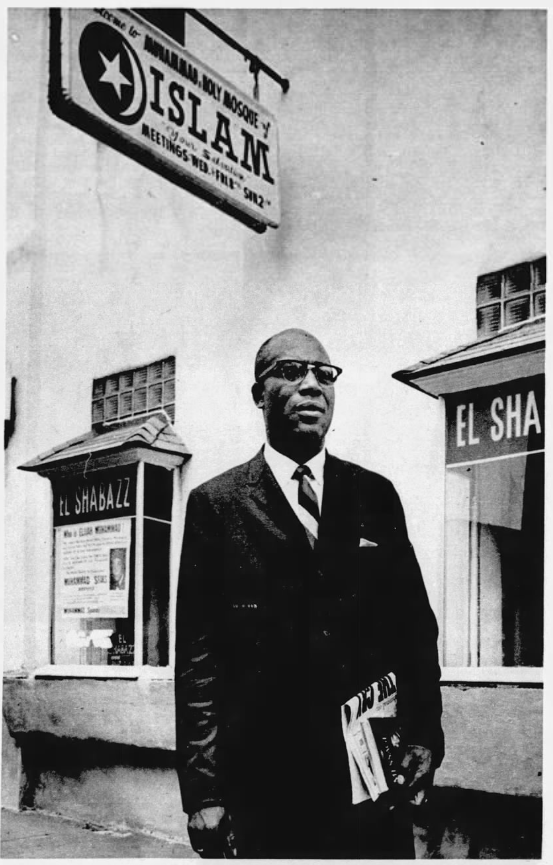
Minister Isaiah Karriem, leader of Baltimore's "Black Muslims".
"The purpose of Islam in Baltimore is to uplift our people, instill into them dignity, race pride and self-respect."11
— Isaiah Karriem, 1966
Foreign-born Muslims arriving in the ’60s and ’70s quickly realized the difference between themselves and these groups, and they would operate independently.
HasanSo, was there a relationship between ISB and Nation of Islam during this period, or what was the relationship like?
Dr. SyedWell, we used to invite and meet them once in a while—but not so strong. They had their own masjid, they used to call it a temple. You know, "Temple Number this and that".
…
Dr. SyedWe met them, but we are not happy because they had different, you know, things. Aqeeda was different.
HasanSo was this a formal meeting?
Dr. SyedYeah.
…
HasanSo, the meeting with the Nation of Islam— where was this, was this at the temple? Or was this at Hopkins?
Dr. SyedAt the temple, at the temple.
Azim KhanThey were nice to us. Elijah Muhammad and his followers.
Dr. Shami relates visiting them as well.
HasanHow was your interaction with Nation of Islam at this time? How did you view that?
Dr. ShamiWe used to go there. Not used to go. We did go over there. And, the Nation of Islam—he [Warith Deen Mohammed?] went to Saudi Arabia. He came here to, I think in Raleigh, North Carolina or somewhere in Columbia. So he go this way and that way. I don't know much about them, but I have been a little bit in touch with them. They were nice people. One of them said, I want my son to memorize Qur'an. But we don't go there. There used to be a masjid for Nation of Islam. They stay over there. We stay here.
HasanAh okay.
Dr. ShamiI'm living here in Columbia, South Carolina, and I think there is one here too. Nation of Islam.
HasanSo ISB, what were the—did they have any interactions—or as a whole, the Muslim community?
Dr. ShamiNo. No, no. I don't think there's any interaction.
The first Black Muslims
Sunni Islam had already found prominence in isolated Black communities in cities like New York, Pittsburgh, Buffalo, and more, as early as the 1930s.i In Baltimore, however, it would not be until the late ’60s for a Black Muslim community to gradually develop.
On a national scale, the death of Nation of Islam minister and later Sunni Muslim Malcolm X, in 1965, influenced a number of African Americans to learn of Sunni Islam. It is difficult to assess what effect this had, apart from a few, unorganized religious seekers.
In fact, Imam Maalik of Masjid as-Saffat first began identifying with Islam in 1970 after reading the autobiography, while serving in Vietnam. At the Army base he served, he experienced the same racism Malcolm X described between the Black and white soldiers.
“… his assessment of our situation, meaning the Black urban male, was right on point, because he lived through it. … in my heart, I believed in Islam. I wanted to be a Muslim. I just didn’t know how.”
— Imam Maalik
In addition, a cultural movement was growing nationally among African Americans influenced by Ahmadi missionaries. In Baltimore, a small Ahmadi center operated in a West Baltimore rowhouse as early as 1962, headed by a Samir Sultaan. For many, Ahmadi literature would be their first exposure to Islamic theology.
Imam MaalikThat brother Samir that was the leader of the Ahmadiyya [in Baltimore]— He was the first person that I ever heard the word ‘Islam’ from. He wrote down on a piece of paper, ‘Islam.’ … He said ‘faith,’ ‘prayer,’ ‘charity,’ ‘fasting,’ and ‘pilgrimage.’ He wrote that on a piece of paper.
HasanThe five pillars.
Imam MaalikYes. First time I ever heard anything about Islam. This is before I went to Vietnam.
HasanSo what year was that around?
Imam MaalikThis was— had to have been maybe ‘68. 1968 for me.
While direct Ahmadi propagation in Baltimore was minimal, a prominent music-centered subculture would be formed by Black jazz musicians influenced by the Ahmadis. By the ’60s, this music-influenced Islamic subculture found its way into Baltimore.j
“Jazz musicians back in the late ’50s and ’60s, they gravitated toward Islam. If you go back and look at some of the album covers, I’ll mention a couple of the names, Yusef Lateef, Pharoah Sanders, Dakota Staton, people like that. They became Muslim.”
— Imam Maalik
As one historian of African American Islam put it, these musicians were “major propagators of Islam in the world of jazz,” developing a jargon that blended bebop slang with Arabic.12
During this developmental period of the ’60s, Islamic practice would not stray far from the identity of Islam and basic dietary restrictions or attire. Umar Mustafa, an African American Muslim and former ISB council member, relates his experiences:
“My mother stopped us from eating pork in 1968, and that was the extent of our Islam. You don’t eat pork. … I stopped eating meat in 1976 because by then I understood the difference between halal and zabihah. … zabihah didn’t come until around the 1970s.”
— Umar Mustafa
Mustafa notes that in the following years, this would change with increasing knowledge in the community, which would include influence from the concurrent arrival of the immigrant Muslims at Shaffer Hall.k
Yusuf El-Abdullah, Salativel Bey, and Ali Holy
From a crossover in 1969 with those immigrant Muslims, a few early names from Baltimore’s convert community become apparent.
According to accounts from the founders, ISB’s founders were unable to register the organization, being immigrants on temporary visas. To assist with the documentation, three men from this early convert community took on various early legal roles.
The three men appear here as incorporators of ISB on an early founding document.
Yusuf Mansur El-Abdullah, Salativel Bey, and Ali Tabu Holy were the first incorporators, and resident agent, of the organization. As late as 1970, El-Abdullah appears as treasurer of the organization.l
Their identities remain obscure, even among elder members of Baltimore’s Black Muslim community. They relate that Holley was a drummer, coming from the aforementioned music-influenced strain of Islam.
The suffixes “El” and “Bey” are typical of the Moorish Science Temple, whose ideology claims ancestry from modern-day Morocco — matching older ISB members’ recollections that two of the men claimed Moroccan origin. Together, these details point to their likely membership in the Moorish Science Temple of America.
Oral recollections remember at least two of the men as merchants — a career path common among this era’s music-influenced Black Muslims more broadly. As historian Richard Brent Turner has written, limited access to formal education pushed many toward self-employment as vendors, work that offered both a living and the freedom to spread Islam.12
El-Abdullah’s signature as ISB Treasurer appears on this 1970 donation receipt.
El-Abdullah was a beef boner and died in Baltimore in 1993. Holley, apparently a merchant seaman, reportedly died at sea and was subsequently buried in Seattle. The death of Salativel Bey was related as follows:
“Our imam, his name was Dr. Shoukat, Shoukat Yusuf Khan. … So Salativel Bey, he met him many times, and he said that when he dies, he should be buried as a Muslim. You know, Muslim funeral should be given to him. … He said, ‘Okay. Keep in, keep in touch.’ But they lost touch and then he died, and his body went to the mortuary of the university hospital. … And then that time, Yusuf Khan was doing a residency in ophthalmology, and somebody said there is some Muslim's body has come and is in washing. So he went there and he buried Salativel Bay. … So he procured his body, and he was given a proper Muslim burial. … That is an act of God, you know?”
— Dr. Ashruf
Immigrant—African American relations
It is uncertain what relationship these two nascent communities initially had in the late ‘60s, and whether or not this initial contact was simply for documentation purposes.
Across the U.S., including in Baltimore, a noticeable separatism would manifest between immigrant and Black Muslim communities, contrasting with the previous closer relations of the dawat-focused Ahmadi missionaries.
In discussing the three African Americans who helped register ISB, Umar Mustafa gives his take on their involvement:
“You should ask yourself the question, why weren’t they more involved? Because I think in many cases, they felt that they couldn’t be more involved. Because you gotta remember, they probably had— they probably didn’t even have a high school education. Probably one of them made sixth or, sixth or seventh grade, and they felt very uncomfortable.”
— Umar Mustafa
They represented distinct communities with different cultural backgrounds, languages, and lived experiences. Many African Americans originally converted to Islam as a means to uplift their communities. Some even had lingering nationalist influences from prior movements, as well as from the general Black power atmosphere of the ’60s.m
“No one brought the nationalists to the [Ahmadi] meetings. We had one foot in that world and one foot in Islam. Other Muslim Sunnis were doing it, straddling the line.”
— Turner on the broader Black Muslim experience nationally12
In addition, many of the immigrants were not as initially focused on Islam as converts—most were primarily focused on navigating a new life in a new land. Imam Maalik relates how for some, it would be encounters with those converts that would invigorate their practice.
“They came in town and saw us covered or wearing kufis, wearing beards, taking off for Jumu‘ah, and then they would say, ‘Y’all do that? Y’all, they, y’all, are y’all allowed to do that?’ Said, ‘Yeah, we… Well, we don’t, we don’t ask for permission. We just do it.’ And from that, the immigrant community started to realize that, you know, they were gonna have to take a similar posture.”
— Imam Maalik
Though there were positive relations, it is due to this separatism that the history of the immigrant Muslims in Baltimore largely follows the history of ISB itself. Likewise, the history of the Black Muslim community would surround Masjid as-Saffat, founded in 1971.
The two communities’ memberships did cross over at times, but each organization remained dominated by its own community. It would not be until the ‘80s that ISB gained another African American council member, when Umar Mustafa took charge of establishing the school — whose first principal, Dr. Islaah Abd al-Rahim, was also African American.
Two West Baltimore mosques
Jumu‘ah and Eid prayers
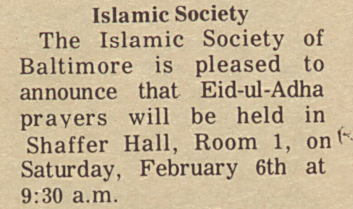
For prayers held on other days other than on Sunday—specifically the congregational Friday and Eid prayers—some core ISB members initially did gather at Shaffer Hall.
ISB Eid prayers are advertised in the Johns Hopkins News-Letter, 1971.14
However, this would quickly change. With the foundation of Masjid as-Saffat in 1971, and the conversion of Baltimore’s Nation of Islam mosque to Sunni Islam in 1975, public daily prayers were made available in Maryland for the first time.
Masjid as-Saffat
Masjid as-Saffat’s founding group was initially—similar to the three men who registered ISB—shaped by influences from music, black power movements, and stints at the Moorish Science Temple.
These men regularly congregated in D.C. to participate at the quasi-military Black Man’s Development Center, founded by Black power activist Hassan Jeru-Ahmed, or “Colonel Hassan”, who was not a Muslim.n
Members of the Dar ul-Islam, a Black Sunni movement out of New York—the largest and most orthodox such group at the time—would travel up and down the East Coast, looking for members to convert.
Upon hearing of the men in D.C., in about 1970, they would bring several members to their Brooklyn mosque to formally take the shahada. The Dar’s imam, Yahya Abdul-Karim, instructed the Baltimore members—Taifa Abdullah, and a Mustafa—to establish Islam in their city.
“So, the Imam of the Dar in Brooklyn, New York, he told Taifa and Mustafa: ‘Go establish Islam in your area.’”
— Imam Maalik
Abdul-Karim would specifically instruct them to align with the Sunni Muslims in Baltimore, rather than the Ahmadis.
“[He] told us, ‘You go to the brothers from Pakistan because they're practicing Islam.’”
— Abdul Salaam
They held their first Jumu‘ah prayer in Baltimore in 1970:
“In 1970, the brother Abdul Salaam, Imam Taifa, the brother mentioned Umar Nuruddin, they would hold Jumu‘ah at Abdul Salaam’s house, which was on Monroe Street, Monroe and Baltimore Street. In an apartment on the third floor. As far as we know, that was the first Jumu‘ah that was held. It was in 1970.”
— Imam Maalik
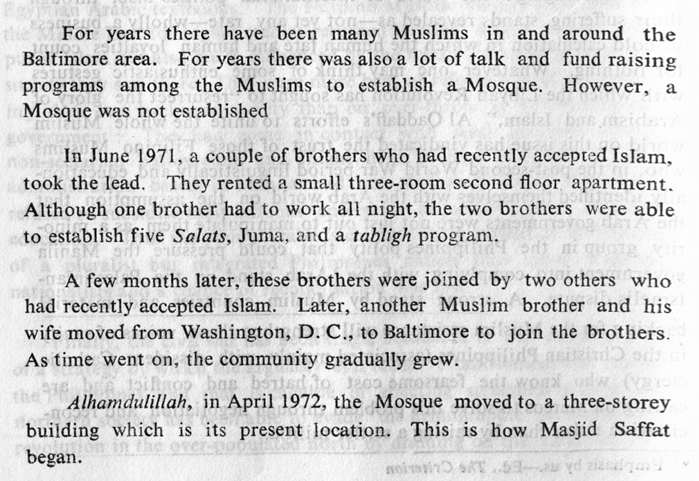
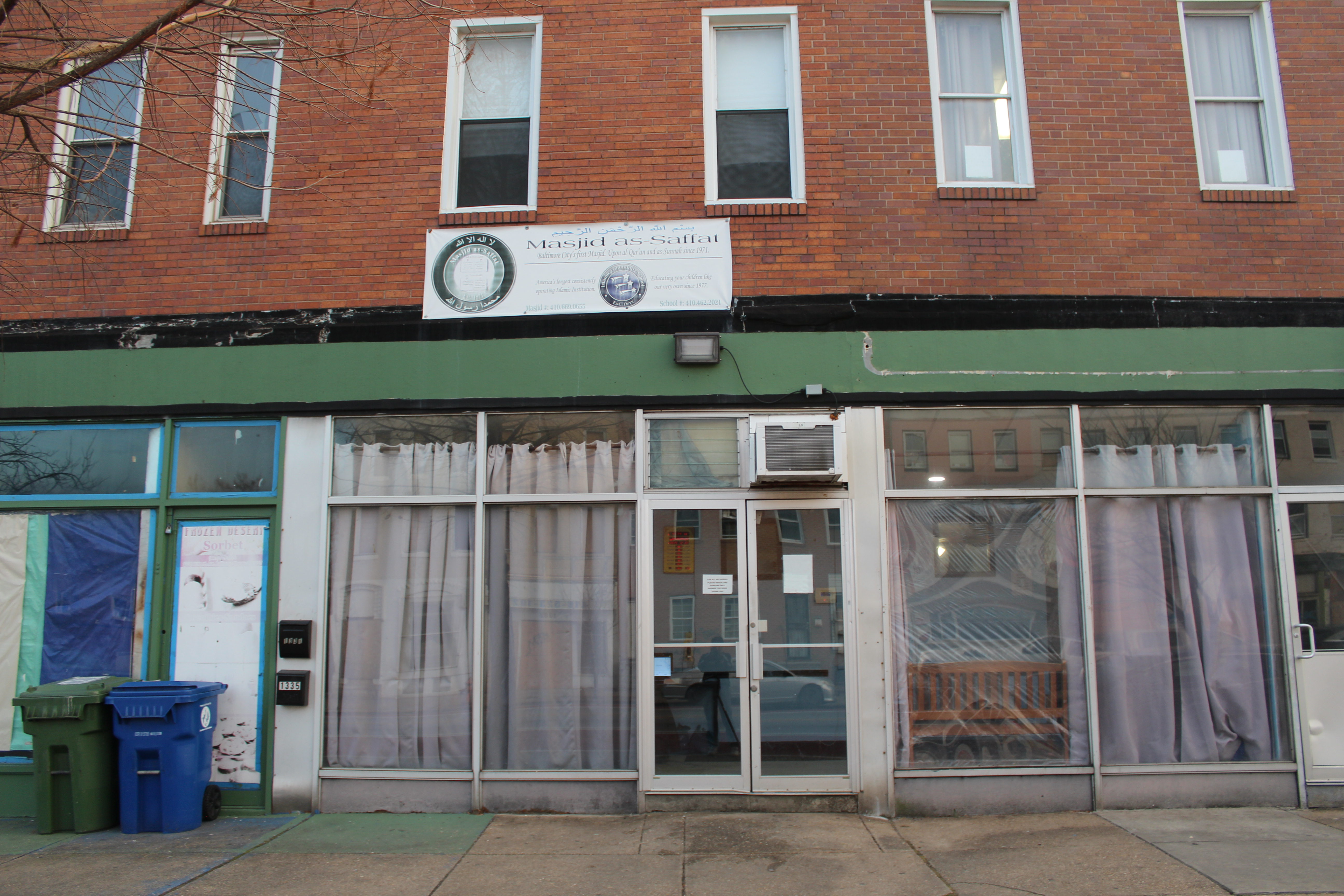
By 1971, they formally established Masjid as-Saffat in a rented second-floor apartment on West Lanvale Street, where they established the five daily prayers. They moved to Myrtle Avenue in 1972, operating Islamic classes for “brothers, sisters or children”, tabligh programs for non-Muslims, and outreach programs for local prisons.
This was the first mosque in Maryland.
A description of Masjid as-Saffat’s founding, published by Imam Taifa Abdullah in the Baltimore Magazine, reproduced in The Criterion, 1973.15
Imam Maalik recounts the story of this group’s first contact with the immigrant ISB members, who were yet unaware of their existence. Imam Mustafa, their imam, refused service in the Vietnam War, objecting on religious grounds. Included in his sentence was service at the University of Maryland Hospital.
There, he noticed the name tags of men in the corridors with Muslim names.
“He would run into the doctors whose name tag is Muhammad, or he would see their name tags, Khan, Shafi. … And he would say, ‘Oh, you have a Muslim last name. We have a masjid.’”
— Imam Maalik
These were the doctors associated with ISB. Following this encounter, several would begin coming to Masjid as-Saffat for Jumu‘ah prayers.
“It was a rowhouse, and on the top floor, there was some place where we were about fifteen, twenty people praying Jumu‘ah.”
— Dr. Shami
Muhammad’s Mosque No. 6 (present-day Masjid ul-Haqq)
In 1975—following developments which led to the Nation of Islam’s official transition to Sunni Islam—their temple, or mosque, began operating as a traditional Sunni mosque, allowing foreign-born Muslims to attend.
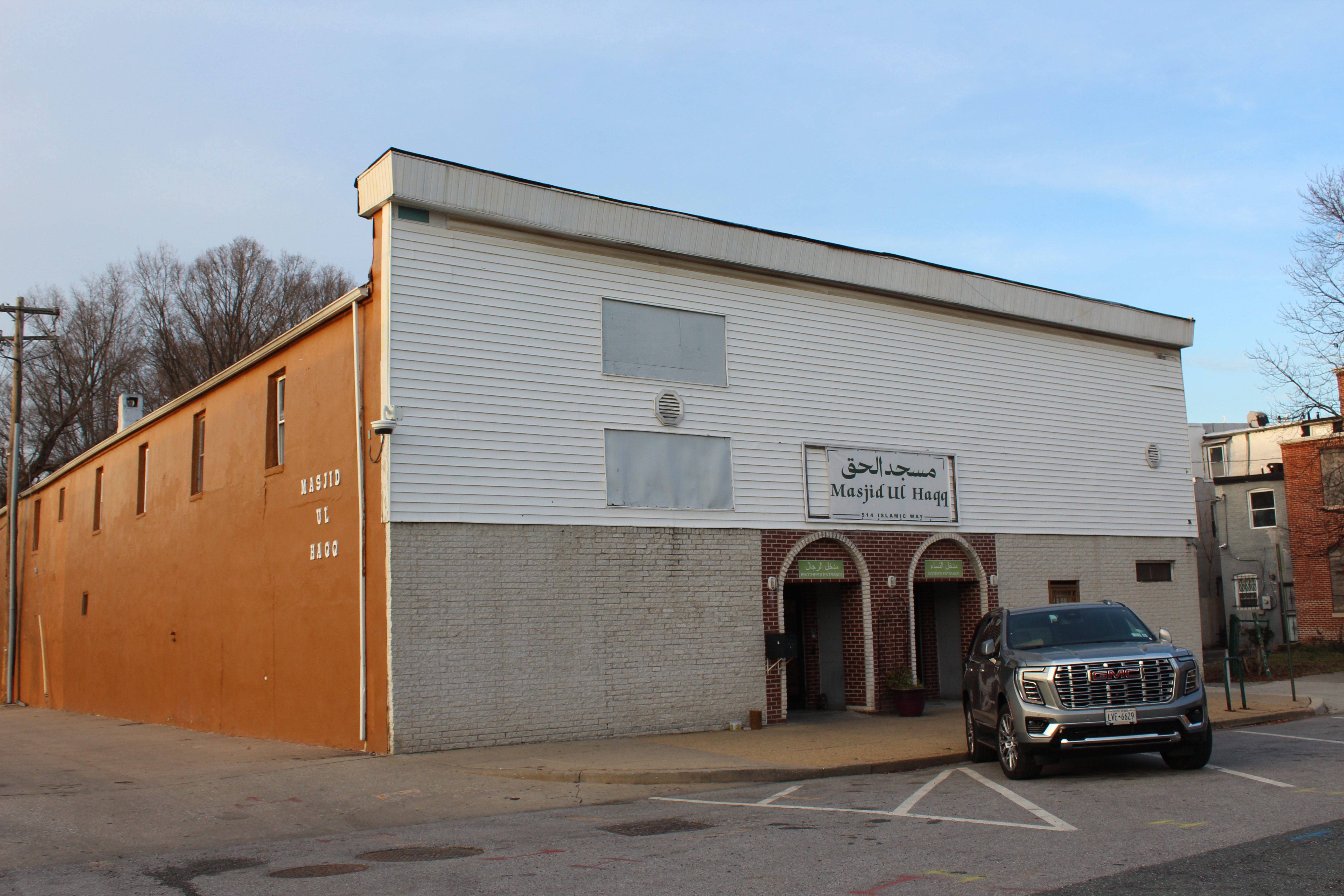
They would retain the “No. 6” in their name for some years, before becoming Masjid Muhammad—and later Masjid ul-Haqq. The mass conversion of thousands of Nation followers made this mosque vastly larger than as-Saffat.
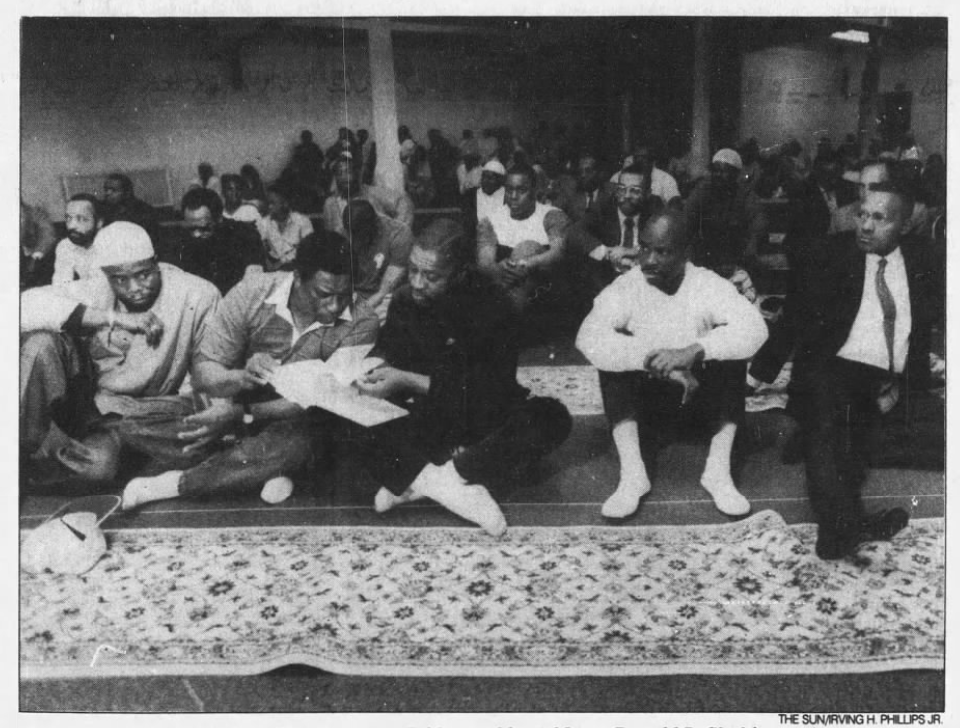
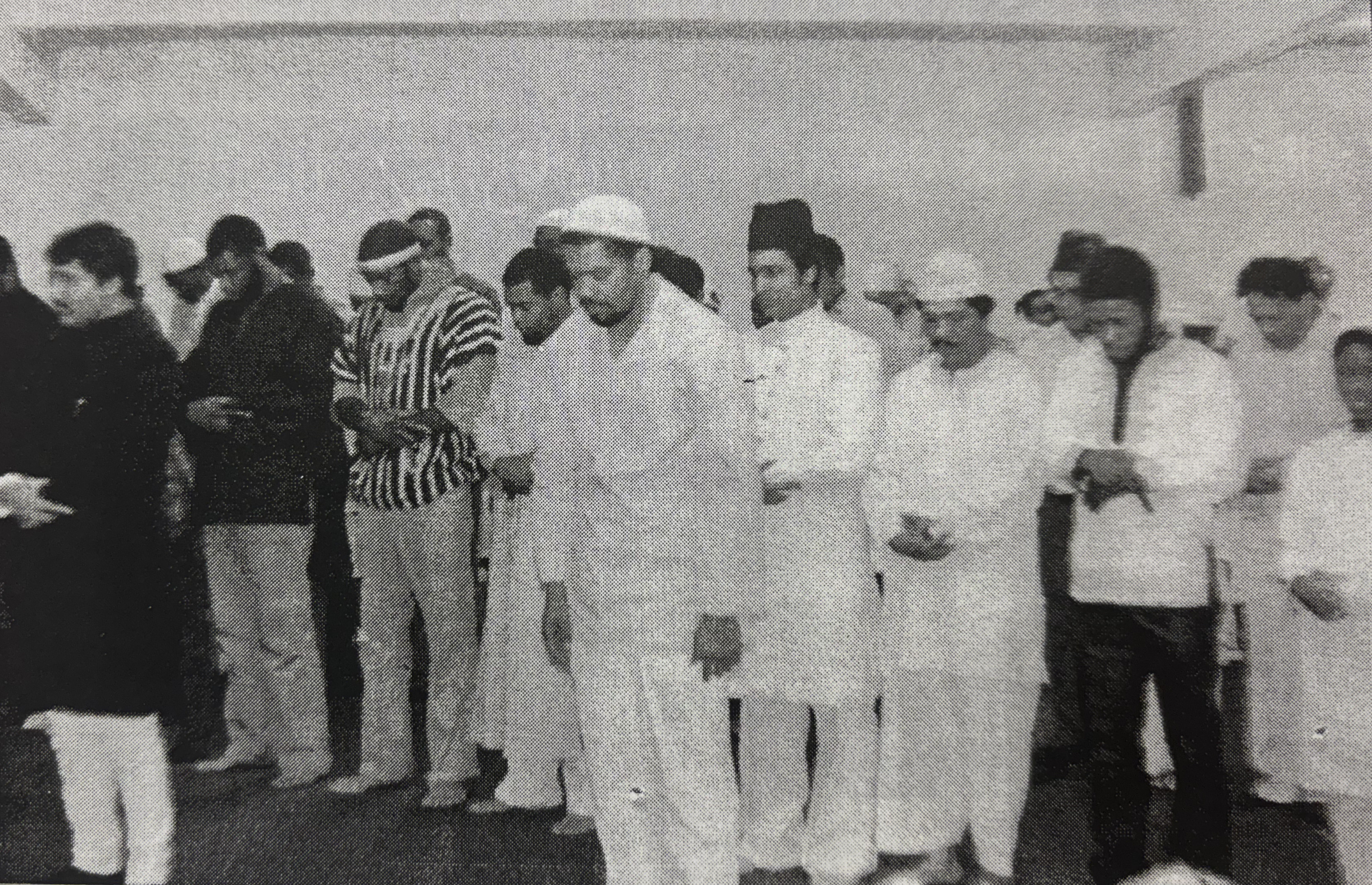
It would be these two mosques which ISB members would largely attend for congregational prayers. A 1978 Sun report covering a Jumu‘ah prayer at Masjid Muhammad recorded 300 Muslims in attendance. Two of them were foreign-born.
“What I see here is a resurgence of Islam. It reminds me of the early rise of Islam in the East, when I see the vigor, the sincerity of the belief.”
— Dr. Awad, 197817
This dynamic was replicated across dozens of cities where a large former NOI presence was met with streams of immigrant Muslims. Again, despite immense cultural differences, there was harmony between the various communities.
“Many immigrant Muslims that are sincere will say that the converted Muslims are better Muslims than they are, because they have taken their religion for granted, while a convert hasn’t. … Many immigrants have come to America, not to practice their religion, but to aspire to the American dream.”
— Dr. Awad, 197817
Both Masjid as-Saffat (left) and Masjid ul-Haqq (right), the former NOI mosque, continue to operate in Baltimore. Photos by the author.
Other programs
"So many people did so many activities."
— Dr. Shami
Inter-mingling between members of ISB, Masjid as-Saffat, and Masjid Muhammad would be frequent. In 1973, an “Egyptian brother” was reported holding Arabic courses at Masjid as-Saffat (almost certainly Dr. Awad). Meanwhile, African American Muslims frequented ISB’s meetings at Shaffer Hall.
Of many influential names during the ’70s, among them are Dr. Shoukat Yusuf Khan, one of ISB’s early imams, and Dr. Javaid Shafi, president of the Association through the late ’70s.
Dr. Shafi was a defining figure of the community in this period. Among numerous stories that may be highlighted, Dr. Shafi brought a Burmese Muslim he met in Pakistan back to the U.S., to help preach Islam to Baltimore’s Muslim communities.
Hafiz Kasim Burmi teaches Arabic to congregants at Masjid Muhammad. He helped bridge the gap between immigrant and Black Muslims in Baltimore.
In 1979, the first joint Eid prayer of Baltimore’s various Muslim communities was reportedly held at Masjid Muhammad.18
Olushola Gross leads a joint Eid prayer at Masjid Muhammad, 1979.18
Among ISB’s programs at Shaffer Hall was a Sunday school. They used two floors for classes, despite only being given one room. One of ISB’s Sunday school teachers—Muhammad Aslam—drove weekly from his residence in Philadelphia to teach there. He resigned as a Major in the Pakistani Army to devote his life to missionary work in the U.S.19
By the early ’80s, coinciding with the construction of Masjid Al-Rahmah, sectarian issues began to plague leadership in the organization. The presidency was handed to Dr. Mahmud Thamer, a respected, neutral party. He helped progress the organization through a number of reforms.
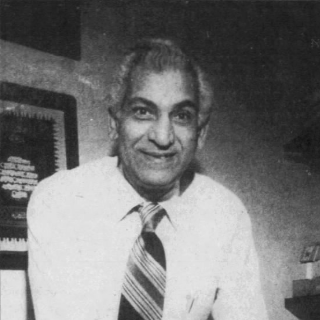
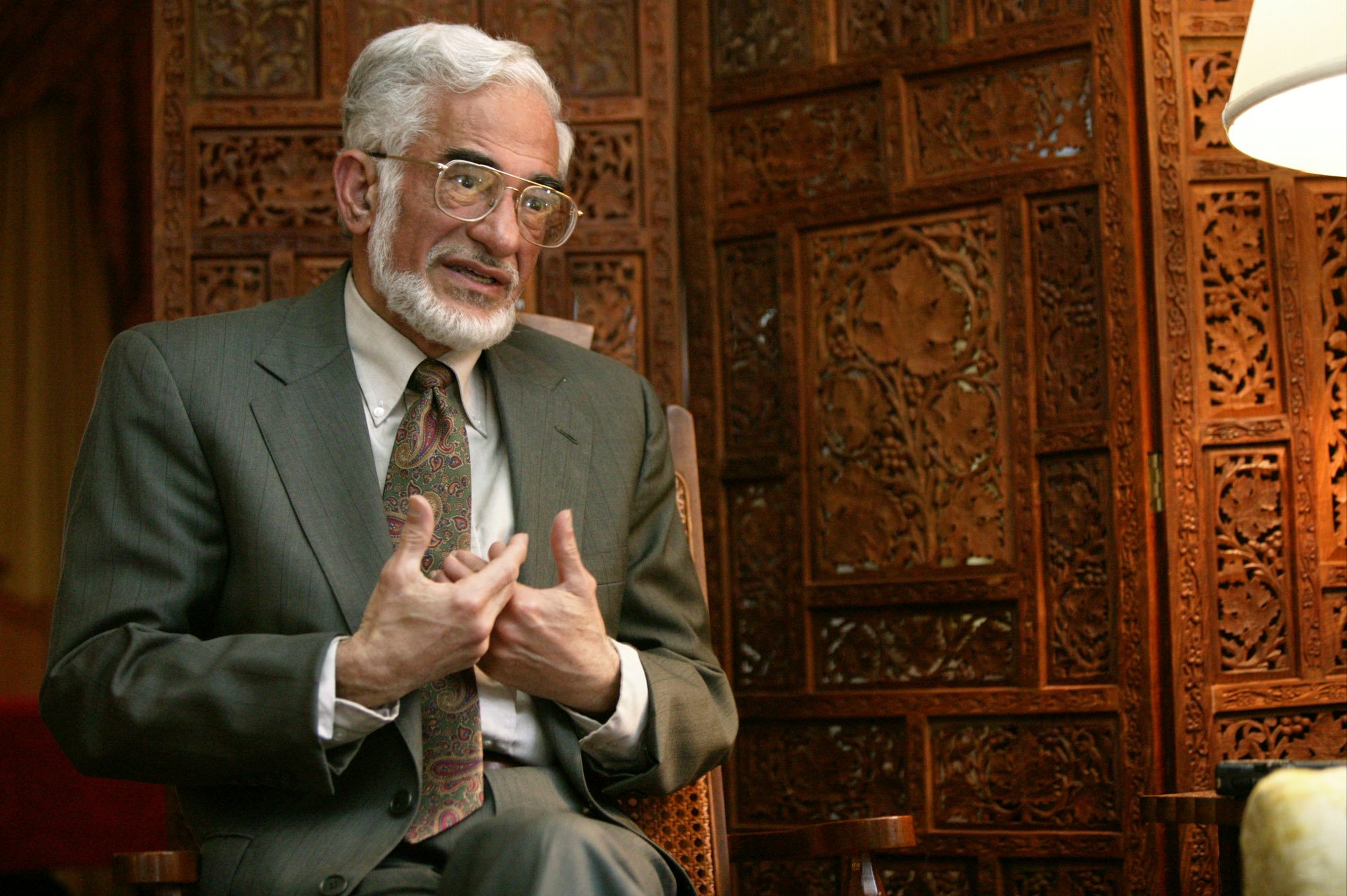
Dr. Mahmud Thamer made a number of reforms as president in the early ‘80s. Photographed here in 2003.20
Public awareness
The context in which Muslim immigrants lived during the ’60s and ’70s was far different from today, and the founders recall how nobody knew Islam at the time.
Dr. ShamiMy boss was one of the best person [sic] I have met in my life, and he would say 'This time is a meeting here in the office.' I said, 'This time we have our Jumu‘ah prayer.' He said, 'You come at this time.' I said, 'I don't know when they will finish.' He said, 'Okay. You come any time you want to.' Very nice.
HasanMasha'Allah.
Dr. ShamiVery nice. Very nice. Very nice. Yeah, and they would respect my food. Hardly ever I had any discrimination. Hardly ever.
In terms of food, there were no halal shops to purchase Islamically-permissible zabiha, or ritually-cut, meat. Muslims would purchase from a certain local individual who raised the animals at his own home.
Members of the Black Muslim community recall resorting to kosher meat.
“There were no halal establishments back then, in 1971. What we would do is we ate kosher. We would go to the, there was a Jewish supermarket called Shapiro’s, in the upper part of Reisterstown Road. And we would go there and purchase our meats.”
— Imam Maalik
Public awareness of Islam would soon change. Dr. Syed personally recalls a turning point in 1977 during the Hanafi Siege, a hostage-taking carried out by former Nation of Islam members in a feud with the group. Of their demands was the cancellation of the premiere of The Message, which they believed to depict Prophet Muhammad (SAW).
The pattern of negative press in America surrounding Muslims was sharply intensified in 1979, during the Iranian hostage crisis.
Modern ISB land
ISB’s attention had originally been drawn to its present-day Baltimore County property by a man named Sabir Rahman, who worked in real estate. He informed ISB of the availability of the 8-acre lot. They had evaluated a number of other spots to lay their roots, including churches on North Avenue, but were ultimately averted by a lack of parking space.
The settlement for the property was made in 1976, in the name of Mushtaq Khan, for $34,000. It would be another six years before enough funds were raised to begin construction, ensuing from 1982–83.
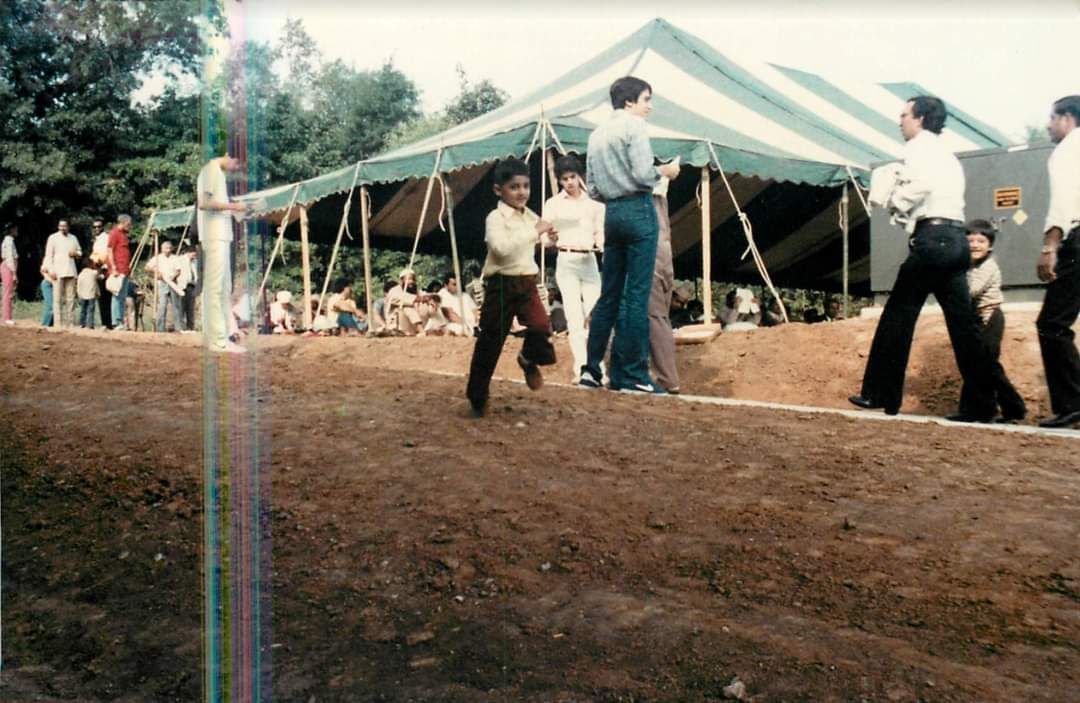
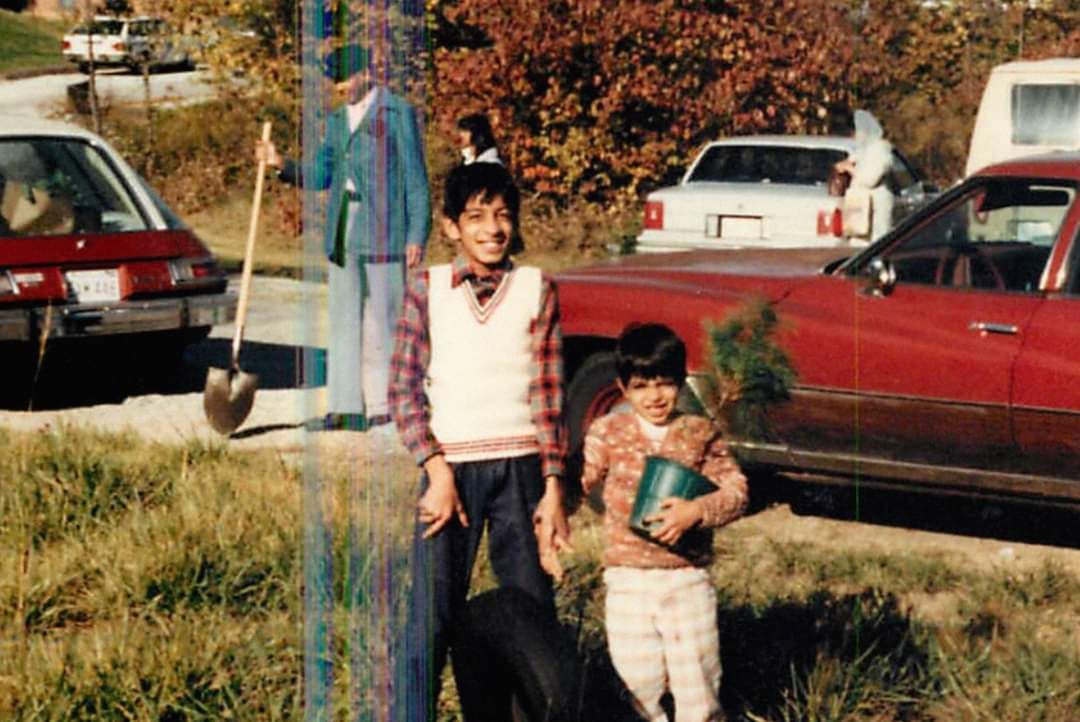
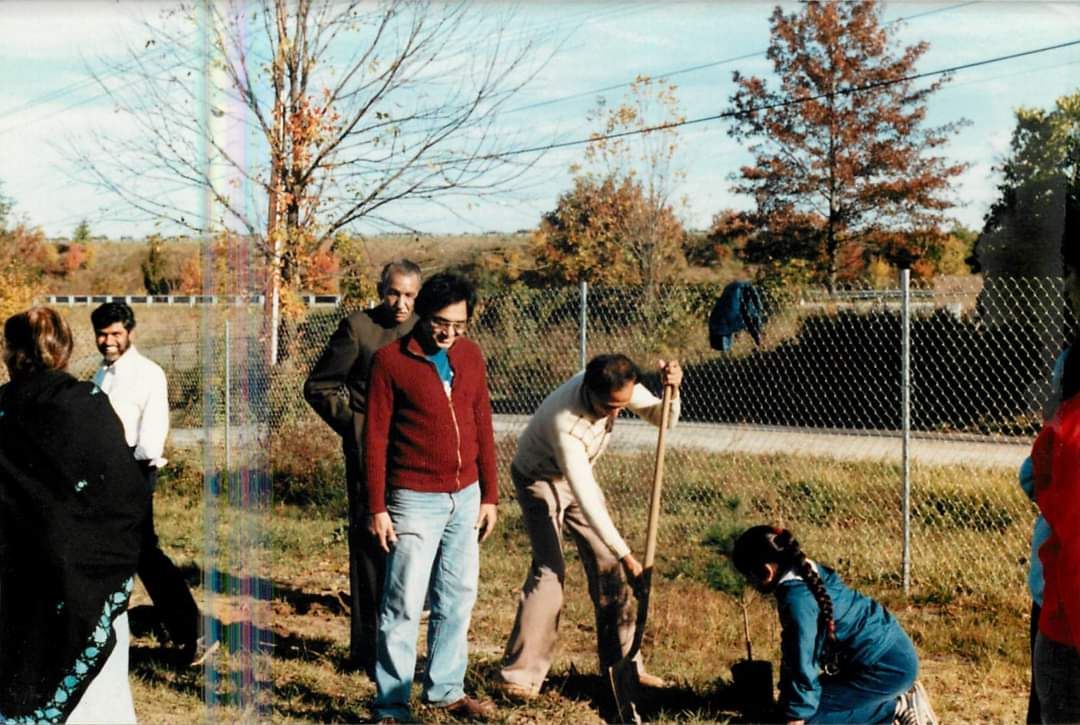
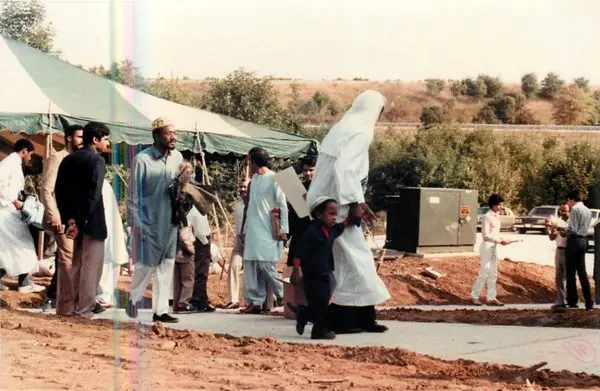
Families gather at ISB's new land prior to the construction of Masjid Al-Rahmah, early 1980s.
The mosque opened its doors in the early 1980s. The name Masjid Al-Rahmah was adopted by Imam Adam El-Sheikh. It would be the first purpose-built mosque in Maryland—the fourth overall after Masjid as-Saffat, Masjid ul-Haqq, and Masjid Al Muminiin, another convert-led mosque in Baltimore.
Here, it quickly grew into a pillar of the local Muslim community, becoming one of the largest and most defining mosques in the region. Its growth continues to the present-day, remaining at its core a place for prayer and learning. In recent years, it has served as a springboard for many other mosques in surrounding counties.
Reactions to growth
HasanHow did it feel watching the mosque grow from its beginnings into what it is today?
Dr. SyedI am very very happy because I am one of the founders of this masjid. It's like a baby growing—you know, big. If you are a father, and you see your child growing, and you know becoming a doctor or engineer. You feel proud and happy, correct?
HasanWhat was your reaction to seeing President Barack Obama visiting in 2016?
Dr. SyedI was very very happy to watch him on the TV.
HasanOh, you watched it on TV?
Dr. SyedYes. And as I told you in 1995, I gave a Jumu‘ah khutbah there.
HasanSo, you visited in 1995? Was that the last time you visited the mosque?
Dr. SyedExactly, correct.
HasanOkay, so what was your reaction then, seeing [the mosque], after what, 20 years?
Dr. SyedI met a couple of people. Oh I met them, still they were alive. Maybe Dr. Azim Khan was there, and a couple of people were there. I was very happy to see a school. There was an indoor playground and there were houses built for the Muslim and the Imam—something like that.
HasanYeah. Those houses are still here today, and the school's still running. I actually attended it.
Dr. SyedGreat. You know, I felt very very happy that it was just a dream come true. Subhan'Allah. Yeah, Subhan'Allah. That's the words I want to use: a dream come true.
The same question was put to Dr. Shami, one of the oldest of the original members — the generational divide was profound. He gave the following response:
HasanHow does it feel for you, seeing the growth?
Dr. ShamiWell, it is not how I feel. It is how by Allah feels that—who did what and what was the extension, the [?], the sincerity. So that's what counts. And, yeah, we see this thing, and then there is a proverb in our Urdu language that, 'Do a good deed and throw [it] into a gushing river.' نیکی کر، دریا میں ڈال. Do a good deed and throw [it] into a gushing river, you will never see it.
HasanSubhan'Allah.
Dr. ShamiThis is very hard to do. Very hard to do. The ego, the nafs is the one which will ask you to remember, 'Oh, you did this thing. Oh, you did this thing.' And, just do good things, and for that, never look back.
Notes
a.
The Immigration Act of 1917, the Emergency Quota Act of 1921, and the Immigration Act of 1924 contributed to Asian exclusionary policies of the early 20th century. The Immigration and Nationality Act of 1952 would place quotas on Asian immigration, which would remain heavily restricted until the Immigration and Nationality Act of 1965.
b.
A major factor resulting in this demise were the WW1-era immigration restrictions that cut off the supply of immigrants. Most would either assimilate or return home. What is likely the last-standing organization from this wave of Arab immigration is the American Moslem Society, which has operated the Dearborn Mosque in Michigan continuously since 1937. Other contenders, like the Mother Mosque of America in Iowa (1934) and the Powers Street Mosque in Brooklyn (1931) still exist but had been sold or fell into disuse for decades.
c.
The nearest Sunni mosque to Baltimore would have been D.C.’s Islamic Center, dedicated by President Eisenhower in 1957. It operated as a rigid diplomatic institute rather than a community-led institution—though it did hold regular prayers. Azim Khan relates driving to D.C. for Eid prayers through the ‘70s.
d.This is in regards to Sunni Islam. Ahmadi Muslims had an earlier established presence in the U.S. than Sunni Muslims, due to the influence of early-20th century missionaries. A small Ahmadi center existed in Baltimore as early as 1962, operating at 716 N. Fremont Avenue, headed by a Samir Sultaan.2
e.None of the founders interviewed were able to recall how exactly Dr. Sakr had become connected with the founding members living on Sarril Road, but they do remember him visiting during early formative meetings. The notion of Dr. Sakr spearheading ISB while organizing the JHU MSA is supported by the fact that both groups entered the public record in the same month in 1969. ISB was registered on September 2, 1969, while the JHU MSA first appears in a Johns Hopkins News-Letter article dated September 26.4
f.
At least two others at the Sarril Road Apartments would become involved shortly after founding: Mohammed Ghazi and Nawaz Khattak.
g.
The identity of this Muslim professor could not be determined through oral records or University Archives research. This anecdote was provided solely by Azim Khan, who did not know the professor's name.
h.Details—including both the start date and location—of these meetings is conflicting. ISB is recorded holding joint meetings with the MSA as early as September 1969 in Levering Hall’s Sherwood Room.4 While Aisha Khan relates that ISB’s Sunday meetings began in November 1969, ISB is continually recorded holding these regular Saturday meetings in the Sherwood Room in April 1970.7 It is possible that they could have been holding both the Saturday joint meetings alongside their Sunday meetings that began on November 2, as attested by Khan. By the late ‘70s, the Shaffer Hall location is attested in print.8
i.
Likely the earliest Sunni Muslim missionary to the U.S. was Sudanese missionary Satti Majid, who was in the U.S. from about 1904 to 1929 in Detroit, Pittsburgh, New York City, and Buffalo. His teachings influenced the creation of Brooklyn’s State Street Mosque in 1939, which would become the spiritual capital of the African American convert community. Many other isolated Black Sunni movements and mosques would arise during this period, primarily through the influence of Ahmadi missionaries.
j.
The notion of this culture being present in Baltimore in the late ’60s is in reference to anecdotes surrounding the three men who helped register ISB in 1969—Yusuf El-Abdullah, Salativel Bey, and Ali Tabu Holley.
k.
Experiences are anecdotal, and, of course, vary from person-to-person. In general, however, the late ’60s was a developing period for convert communities in Baltimore—these statements may not apply within just a couple years’ time.
l.
The 1970 donation receipt, featured prior in the article, displays a signature from the ISB Treasurer, signed by El-Abdullah.
m.In an example from early ’60s New York City, African American congregants of the Sunni-based State Street Mosque split and created an entirely new movement, the Dar ul-Islam, desiring a focus on using Islam to uplift downtrodden Black communities in the city. In the late ’60s, these influences would dissolve, and their movement became strictly Sunni.13
n.
According to Imam Maalik, prior to their formal conversion, members of the Black Man’s Development Center were Muslim only by identity. Only one of those men had been Muslim at the time. This would be Colonel Mahdi, who worked at D.C.’s Islamic Center.
2.
Moses J. Newson, “Pakistani Says Muslims in U.S. Misrepresent Islam,” Afro-American (Baltimore), May 5, 1962, p. 17. ProQuest Historical Newspapers.
3.
Baltimore Museum of Industry Archives, BGE38380, Sarril Apartments, Frankford Ave and Force Road, 1963.
4.
“Campus Notes — Islamic Gathering,” The Johns Hopkins News-Letter 74, no. 3 (September 26, 1969): p. 2. Johns Hopkins University Sheridan Libraries.
9.
William C. Hamilton, Exterior view of Shaffer Hall, September 8, 1965. Johns Hopkins University Sheridan Libraries, Johns Hopkins University Graphic and Pictorial Collection.
20.
Michael Dibari Jr., photograph of Mahmud Thamer, April 3, 2003. Associated Press (Alamy ID 542913818). Licensed for digital editorial use, Order 144184834.